


Typical Commercial Construction Cost Ranges Per Square Foot
New Jersey vs. New York Metro (Interior Construction)
🏢 Office Interiors (Tenant Fit-Outs)
New York City
-
Basic refresh / light TI: ~$90–$130 / SF
-
Standard office build-out: ~$130–$180 / SF
-
High-end / Class A / law & finance: ~$180–$250+ / SF
New Jersey
-
Basic refresh: ~$75–$115 / SF
-
Standard office build-out: ~$110–$160 / SF
-
High-end office interiors: ~$160–$210 / SF
Why NYC costs more: union labor premiums, DOB approvals, after-hours work, vertical logistics.
🍽 Restaurant Build-Outs
New York City
-
Fast casual / café: ~$200–$275 / SF
-
Full-service restaurant: ~$275–$375 / SF
-
Chef-driven / high-end: ~$375–$500+ / SF
New Jersey
-
Fast casual / café: ~$175–$250 / SF
-
Full-service restaurant: ~$250–$350 / SF
-
High-end dining: ~$350–$450+ / SF
Key drivers: kitchen exhaust, grease management, gas upgrades, fire suppression, utility availability.
🏨 Hospitality (Hotel Interiors & Renovations)
(Guestrooms, corridors, public spaces — not full ground-up)
New York City
-
Select-service renovation: ~$140–$200 / SF
-
Boutique / upscale interiors: ~$200–$300 / SF
New Jersey
-
Select-service renovation: ~$120–$180 / SF
-
Upscale / boutique interiors: ~$180–$260 / SF
Ground-up hotels can exceed these numbers, but interior scopes typically land here.
🛍 Retail Interiors
New York City
-
Vanilla box to open retail: ~$125–$200 / SF
-
Mid-tier branded retail: ~$175–$275 / SF
-
Flagship / high-design: ~$275–$400+ / SF
New Jersey
-
Basic retail build-out: ~$100–$175 / SF
-
Mid-tier retail: ~$150–$250 / SF
-
High-design retail: ~$250–$350+ / SF
Retail costs swing heavily based on storefront work, ceilings, lighting density, and millwork.
📦 Warehouse / Industrial
Ground-Up Shell (NJ stronghold)
-
Low-finish warehouse shell: ~$85–$125 / SF
-
Higher-bay / ESFR / tilt-up: ~$110–$150 / SF
Interior Office / Fit-Out (Both Markets)
-
Industrial office build-out: ~$90–$140 / SF
NY industrial costs rise quickly for urban infill or multi-story logistics, but NJ remains close to national averages.
Summary Table (Realistic 2025 Ranges)
| Sector | NYC Typical Range | NJ Typical Range |
|---|---|---|
| Office Interiors | $130–$250 / SF | $110–$210 / SF |
| Restaurants | $250–$400+ / SF | $225–$375 / SF |
| Hospitality (Interiors) | $140–$300 / SF | $120–$260 / SF |
| Retail | $125–$400+ / SF | $100–$350 / SF |
| Warehouse (Shell) | $110–$160 / SF | $85–$150 / SF |
Important Context (worth stating in the blog)
-
These are hard construction costs only
-
Excludes FF&E, design fees, permit fees, landlord work, and tenant allowances
-
Assumes competitive bidding and normal market conditions
-
NYC premiums are driven more by logistics and regulation than materials
If you want, I can now:
-
Integrate these corrected ranges cleanly into your blog
-
Adjust tone further toward developer-level analysis
-
Or tailor numbers specifically to North NJ vs. NYC boroughs

Fit-Out Contractors: A Practical Guide to Commercial Interior Construction
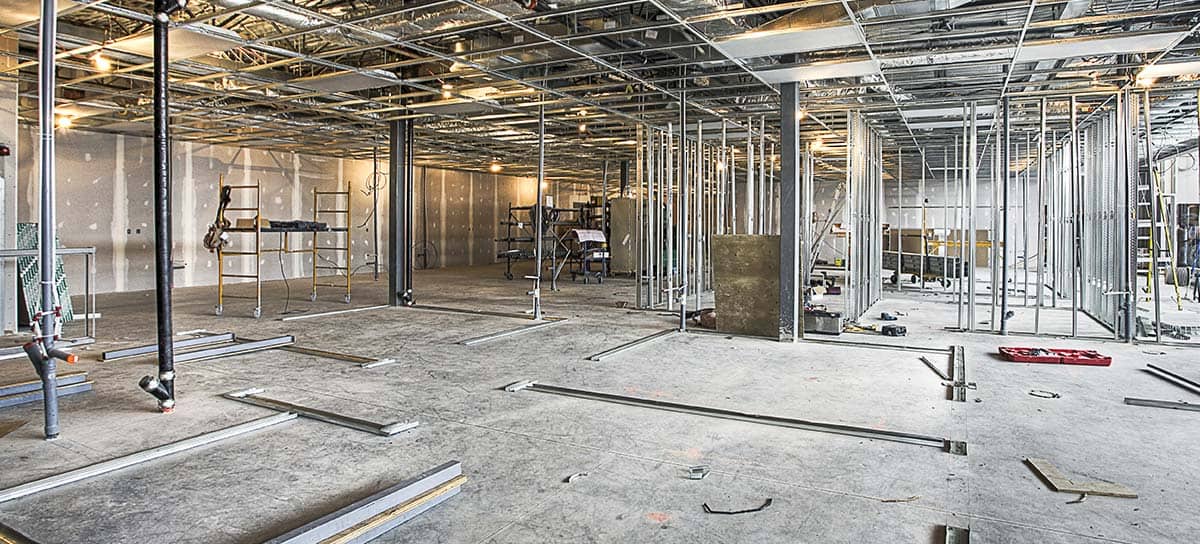
Fit-out contractors play a critical role in commercial construction by transforming unfinished or outdated interior spaces into functional, code-compliant environments. From office interiors to retail and restaurant spaces, fit-out work bridges the gap between base building construction and final occupancy.
Understanding what fit-out contractors do—and how fit-out construction differs from other types of interior work—helps owners, tenants, and property managers plan projects more effectively.
What Is a Fit-Out Contractor?
A fit-out contractor is responsible for the interior construction scope required to prepare a commercial space for use. This work typically begins after the building shell or base building has been completed.
Common fit-out responsibilities include:
-
Interior demolition and selective removals
-
Framing, drywall, and ceiling systems
-
Flooring, wall finishes, and painting
-
Doors, frames, hardware, and millwork
-
Mechanical, electrical, and plumbing (MEP) coordination
-
Lighting, controls, and low-voltage systems
-
Permitting, inspections, and closeout documentation
Fit-out contractors manage multiple trades and ensure the finished space meets design intent, building codes, and occupancy requirements.
Fit-Out Construction vs. Tenant Improvements
The terms fit-out, tenant improvement (TI), and build-out are often used interchangeably, but they generally describe similar interior construction scopes.
-
Fit-out construction focuses on completing or customizing interior spaces.
-
Tenant improvements refer to fit-out work performed specifically for a tenant, often governed by lease requirements.
-
Build-out may imply a more extensive scope, including structural or major MEP modifications.
Regardless of terminology, these projects require detailed coordination and an understanding of existing building conditions.
Types of Commercial Fit-Out Projects
Fit-out contractors work across a range of commercial property types, including:
Office Fit-Outs
Office fit-outs often involve reconfiguring layouts to support evolving workplace needs. Typical scopes include:
-
Open offices, private offices, and conference rooms
-
Breakrooms, reception areas, and support spaces
-
Power, data, and audiovisual systems
-
Lighting and acoustic improvements
Retail Fit-Outs
Retail fit-outs prioritize customer flow, branding, and durability. Common elements include:
-
Storefront modifications and interior finishes
-
Back-of-house storage and employee areas
-
Coordination with landlord design criteria
-
Work within active shopping centers
Restaurant Fit-Outs
Restaurant fit-outs are highly technical and include:
-
Commercial kitchen construction
-
Grease-rated exhaust and make-up air systems
-
Plumbing, gas, and electrical for equipment
-
Health department and fire code compliance
Medical and Professional Fit-Outs
Medical and professional spaces require stricter standards, such as:
-
Exam rooms, treatment areas, and labs
-
Enhanced MEP capacity and redundancy
-
Specialized finishes and infection control measures
Key Considerations in Fit-Out Construction
Existing Conditions and Site Constraints
Fit-out projects rely heavily on existing infrastructure. Verifying field conditions early helps prevent conflicts involving:
-
Ceiling heights and structural elements
-
HVAC capacity and routing
-
Electrical service and panel availability
-
Plumbing tie-in locations
MEP Coordination
Mechanical, electrical, and plumbing systems are often the most complex aspect of fit-out construction. Poor coordination can lead to rework, inspection delays, and schedule impacts.
Scheduling and Inspections
Commercial fit-outs typically operate under tight timelines tied to lease start dates or business openings. Successful projects account for:
-
Permit review durations
-
Inspection sequencing
-
Long-lead materials and equipment
-
Building access restrictions
Occupied Building Requirements
Many fit-outs occur in buildings that remain operational. Contractors must plan for:
-
Noise and dust control
-
Safe material movement
-
After-hours or phased work
-
Coordination with property management
How Fit-Out Contractors Support Project Success
Fit-out contractors serve as the link between design and occupancy. Their role includes:
-
Translating drawings into buildable scope
-
Managing trade sequencing and coordination
-
Ensuring code compliance and inspection readiness
-
Delivering complete turnover documentation
Well-managed fit-out construction helps reduce delays, control costs, and support a smoother move-in process.
Understanding the Value of Fit-Out Expertise
Commercial interiors are fast-moving, detail-driven projects. Fit-out contractors with experience across different property types are better equipped to anticipate challenges related to coordination, logistics, and building operations.
For owners and tenants, understanding the fit-out process leads to more realistic schedules, clearer budgets, and fewer surprises during construction.

Commercial General Contractor Dutchess County
Dutchess County, New York Commercial General Contractor
Dutchess County, New York—stretching from the Hudson River on the west to the foothills of the Taconic Mountains on the east—presents one of the most varied commercial construction environments in the Hudson Valley. The county includes dense urban centers such as Poughkeepsie and Beacon, fast-growing mixed-use nodes in Fishkill, Wappingers, and Hyde Park, historic riverfront districts, large institutional anchors, and expansive rural municipalities. For commercial general contractors, Dutchess requires a sophisticated understanding of corridor-driven development, evolving zoning regulations, environmental constraints, infrastructure variability, and site-engineering challenges shaped by the county’s topography, hydrology, and transportation networks.
Economic Development Trends and Subregional Markets
According to the Dutchess County Economic Development Corporation, major commercial investment in the county is concentrated around life sciences, advanced manufacturing, tourism, mixed-use redevelopment, higher education, and logistics. Each subregion of the county exhibits distinct development characteristics:
- Poughkeepsie: The county’s urban core, with major institutional anchors, courthouse and government complexes, medical centers, mixed-use redevelopment, and dense commercial activity along Route 44/55.
- Beacon: A rapidly growing arts, tourism, and creative economy hub with mixed-use infill, adaptive reuse of industrial buildings, and strong demand for small-format retail and hospitality.
- Fishkill & Wappingers Falls: High-traffic commercial corridors along Route 9, featuring big-box retail, shopping centers, hospitality, logistics, and suburban mixed-use development.
- Hyde Park: Home to cultural institutions such as the FDR Presidential Library and Culinary Institute of America, shaping demand for hospitality and institutional construction.
- Eastern Dutchess (Pine Plains, Millbrook, Dover, Amenia): Rural communities with constrained infrastructure, environmental sensitivities, and limited commercial zoning.
These diverse markets require general contractors to tailor construction strategies to each municipality’s planning framework, infrastructure capacity, and long-term development goals.
Major Commercial Corridors and Development Nodes
Route 9 Corridor
The Route 9 corridor—running through Fishkill, Wappingers Falls, Hyde Park, and Poughkeepsie—is the county’s dominant commercial spine. It contains regional retail centers, medical offices, hotels, restaurants, institutional facilities, and new mixed-use projects. Redevelopment activity focuses on modernizing aging commercial plazas, upgrading building systems, subdividing big-box retail spaces, and improving traffic circulation.
Key considerations for contractors include:
- Access-management coordination with NYSDOT for curb cuts and turning movements;
- Traffic-impact studies and mitigation for high-volume segments;
- Environmental review near wetlands, tributaries, and steep slopes adjacent to the corridor;
- Parking reconfiguration to meet modern standards and multi-tenant needs.
Poughkeepsie Downtown and Waterfront
Poughkeepsie is undergoing significant reinvestment driven by anchor institutions, residential growth, transit-oriented development near the Metro-North/Amtrak station, and ongoing revitalization of the waterfront along the Hudson River. Commercial projects in this area often involve adaptive reuse, infill development, façade upgrades, and integration of flood-resilient building strategies due to proximity to the river.
Beacon’s Creative and Mixed-Use Growth
Beacon has emerged as one of the Hudson Valley’s most vibrant redevelopment zones, fueled by arts, tourism, and an influx of residents relocating from New York City. Development focuses on adaptive reuse of older industrial buildings, boutique hospitality, small-scale retail, galleries, and mixed-use infill. Contractors must work within the city’s architectural guidelines, historic-preservation district rules, and context-sensitive design requirements.
Route 44/55 & Poughkeepsie Arterials
The 44/55 arterial corridors support major institutions, shopping centers, mid-rise office buildings, medical facilities, and large-scale redevelopment sites. Construction in these areas requires careful coordination with NYSDOT, utility providers, and adjacent landowners to manage traffic flow, staging zones, and utility relocations.
Village Centers and Rural Towns
Eastern Dutchess communities prioritize small-scale commercial development with strict design guidelines, environmental protections, and limited infrastructure. Projects here must incorporate expanded septic systems, water-supply analysis, steep-slope controls, and agricultural/residential compatibility planning.
Transportation Networks, Access, and Regional Mobility
Dutchess County’s transportation network—anchored by I-84, the New York State Thruway (I-87) to the west, the Taconic State Parkway, and key state routes such as Route 9, Route 44, Route 55, Route 52, and Route 22—is a primary driver of commercial site selection and feasibility. Proximity to I-84 interchanges in Fishkill and East Fishkill makes these locations attractive for logistics, light industrial, and hospitality uses. However, the parkway system’s prohibition on commercial trucks (such as on the Taconic) shapes freight patterns and limits some corridors to predominantly passenger traffic and smaller deliveries.
Transit accessibility via Metro-North Railroad (Hudson and Harlem lines) further influences development intensity in Poughkeepsie, Beacon, New Hamburg, and communities with connecting bus networks. Transit-oriented development initiatives near rail stations can support reduced parking ratios, higher densities, and mixed-use configurations, particularly in Poughkeepsie and Beacon.
Stormwater, Watersheds, and Environmental Constraints
Dutchess County’s landscape is characterized by multiple watersheds, including the Hudson River, Wappinger Creek, Fishkill Creek, Fall Kill, and smaller tributaries flowing through both urban and rural areas. Commercial projects must comply with NYSDEC stormwater regulations, often requiring Stormwater Pollution Prevention Plans (SWPPPs) that address erosion control, water-quality treatment, and peak-rate attenuation.
Key environmental constraints include:
- Wetland systems and floodplains adjacent to creeks and the Hudson River;
- Steep slopes that increase erosion risk and complicate grading plans;
- Groundwater recharge zones in eastern Dutchess that require careful septic and drainage design;
- Riparian buffers that limit buildable area along streams and watercourses.
Urbanized watersheds in Poughkeepsie, Beacon, and Wappingers may include aging stormwater infrastructure, combined with increased runoff from legacy development patterns. Redevelopment projects must often incorporate green infrastructure—such as bioswales, rain gardens, and permeable pavements—to reduce runoff impacts and comply with local MS4 (Municipal Separate Storm Sewer System) requirements.
Zoning, SEQR, and Local Review Processes
Land-use regulation in Dutchess County is administered at the town, city, and village level, resulting in a diverse array of zoning codes, overlay districts, and design standards. Large or potentially impactful commercial developments typically trigger review under the State Environmental Quality Review Act (SEQR), requiring environmental assessment of traffic, stormwater, ecology, visual impacts, noise, and community services.
Planning Boards, Zoning Boards of Appeals (ZBAs), and, in some municipalities, Architectural Review Boards (ARBs) evaluate:
- Site layout and circulation, including truck routing and pedestrian access;
- Building siting, height, and massing within commercial or mixed-use districts;
- Stormwater and environmental performance;
- Architectural compatibility and signage;
- Parking ratios, shared-parking arrangements, and loading zones.
Projects in historic districts—especially in Beacon, Poughkeepsie, Rhinebeck, and Millbrook—often require additional review for compatibility with existing streetscapes and preservation requirements.
Infrastructure Capacity and Utility Coordination
Infrastructure capacity in Dutchess County varies between urban centers, suburban corridors, and rural towns. Poughkeepsie, Beacon, and parts of Fishkill and Wappingers benefit from established water and sewer systems, while many eastern municipalities rely on wells and on-site wastewater treatment systems.
Commercial general contractors must coordinate with municipal engineering departments and utility providers to address:
- Water-main extensions, upsizing, and fire-flow requirements;
- Sewer-line connections, pump stations, or treatment-plant capacity issues;
- Electric-service load for energy-intensive uses (such as manufacturing, data-heavy operations, or cold storage);
- Telecommunications and broadband infrastructure for modern office and institutional facilities.
Dutchess-Specific Commercial Building Typologies
Retail and Route 9 Corridor Development
Retail development remains concentrated along Route 9, with large and mid-scale shopping centers, freestanding stores, and automotive sales and service uses. Redevelopment often focuses on façade modernization, re-tenanting, pad-site development, and improving circulation and parking efficiency.
Hospitality and Tourism-Oriented Properties
Hotels, inns, and event venues support Dutchess County’s tourism economy, especially in Beacon, Hyde Park, Rhinebeck, and along the Hudson River corridor. These projects may incorporate restaurant spaces, ballrooms, outdoor amenities, and specialized back-of-house operations.
Industrial, Logistics, and Flex-Commercial
Industrial and flex-commercial spaces cluster around I-84 interchanges and key junctions near Fishkill and East Fishkill. These facilities require clear-span structures, ESFR fire-suppression systems, efficient truck access, and flexible interior layouts for a variety of uses.
Office, Medical, and Institutional Buildings
Medical centers, educational facilities, and office buildings serve a growing residential base and regional workforce. Projects in this category require advanced mechanical systems, high-quality finishes, and careful coordination with long-term institutional capital plans.
Environmental Risks, Floodplains, and Watershed Protections
Dutchess County’s environmental conditions vary dramatically between its western riverfront communities, central urban areas, and eastern rural towns. Much of the county drains into the Hudson River, while significant inland watersheds—including Fishkill Creek, Wappinger Creek, Fall Kill, and the Tenmile River system—introduce complex environmental considerations. Floodplain management is particularly important in Poughkeepsie, Beacon, Hyde Park, Wappingers Falls, and the Route 9 and Route 44/55 corridors where development often occurs near waterways or on land with poor infiltration.
Contractors must evaluate updated FEMA flood maps to determine required mitigation measures. Flood-zone development may require:
- Dry-floodproofed ground floors with flood-resistant materials;
- Elevated mechanical and electrical systems;
- Hydraulic/hydrologic modeling to evaluate stormwater behavior;
- Reinforced foundations or pile-supported structures in sensitive areas;
- Riparian buffer compliance with NYSDEC wetland and watercourse regulations.
Eastern Dutchess poses its own environmental challenges, with extensive farmland, rolling hills, and groundwater recharge zones that limit density and require innovative wastewater and stormwater strategies. Development in these areas frequently demands enhanced erosion control, careful siting, and septic-system engineering to protect local aquifers.
Geotechnical Conditions and Site Engineering Challenges
Given Dutchess County’s varied topography, commercial projects often encounter a wide spectrum of geotechnical issues. Western Hudson River communities may face clay soils, shallow bedrock, high groundwater tables, and fill conditions from earlier industrial eras. Central and southern municipalities reveal mixed soil profiles with glacial till, compact subsoils, and pockets of soft soils requiring subgrade improvement.
Eastern Dutchess, in contrast, presents stony soils, steep slopes, and ridge formations requiring sophisticated grading strategies.
General contractors must consider:
- Test borings, geotechnical investigations, and seismic evaluations;
- Rock excavation, blasting, or hammering in hilly areas or where bedrock is shallow;
- Underdrains, sump systems, and groundwater control during deep excavation;
- Soil stabilization or engineered fill for parking fields and roadway expansions;
- Retaining walls, slope stabilization systems, or terraced site design.
In areas such as Poughkeepsie, Beacon, and Wappingers Falls, older industrial sites may require environmental remediation or brownfield cleanup before new construction begins.
Community Review, Architectural Standards, and Public Engagement
Dutchess County municipalities often maintain strong community engagement processes, requiring that commercial developers participate in multiple rounds of design review. Planning Boards and ZBAs evaluate massing, circulation, parking, façade design, and environmental impacts. Architectural Review Boards are active in Beacon, Rhinebeck, Millbrook, Red Hook, and portions of Poughkeepsie, where design character and context-sensitive architecture significantly influence the approval timeline.
Common community concerns raised during public hearings include:
- Traffic impacts on Route 9, Route 44/55, and local arterials;
- Stormwater performance and flooding risk;
- Visual compatibility with surrounding development;
- Impacts on historic resources or viewsheds;
- Light and noise from commercial or industrial operations.
Proactive engagement—such as offering visual renderings, traffic modeling, and environmental analyses—can ease approval processes and reduce delays.
Plescia Construction & Development’s Approach in Dutchess County
Plescia Construction & Development applies a market-specific approach designed to respond to Dutchess County’s varied commercial environments, ranging from dense riverfront downtowns to rural development zones with strict infrastructure constraints.
In urban areas like Poughkeepsie and Beacon, Plescia focuses on:
- Adaptive reuse of aging or historic commercial structures;
- Flood-resilient construction techniques near riverfront zones;
- Coordination with transit-oriented development initiatives;
- MEP upgrades and modernization for mixed-use and institutional properties.
Along commercial corridors such as Route 9 and Route 44/55, the firm integrates:
- Traffic and access-management planning with NYSDOT;
- Stormwater retrofits and green infrastructure enhancements;
- Phased construction strategies for active shopping centers;
- Site-engineering solutions for grading, utilities, and parking redesign.
In rural eastern Dutchess, Plescia manages projects requiring:
- Advanced wastewater and water-supply planning;
- Slope stabilization and erosion-control systems;
- Integration of agricultural, institutional, or low-impact commercial uses;
- Sustainable, low-density construction approaches aligned with local zoning.

Commercial Construction Industry in New Jersey: A Comprehensive Overview
The Construction Industry in New Jersey: A Comprehensive Overview
New Jersey’s construction industry is one of the most dynamic, heavily regulated, and geographically diverse markets in the United States. With proximity to New York City and Philadelphia, a complex patchwork of municipalities, a mix of urban redevelopment and suburban expansion, and a strong industrial past that has required extensive remediation, the state offers both challenges and world-class opportunities for developers, owners, and contractors.
Across its 565 municipalities, New Jersey’s construction landscape is shaped by unique zoning rules, environmental constraints, high labor expectations, and an increasingly technology-driven approach to planning, design, and execution. For commercial developers, the state offers a wide range of project types—from Class A office renovations and multifamily mid-rise developments to logistics centers, industrial conversions, retail complexes, healthcare facilities, and higher-education expansions. This 2,000-word overview outlines every major factor that defines the New Jersey construction industry today, including regulatory frameworks, permitting, labor realities, market trends, environmental factors, and the rising role of digital tools such as BIM, VDC, and project management platforms.
1. New Jersey’s Regulatory Environment: The Foundation of the Industry
At the core of every construction project in New Jersey is the New Jersey Uniform Construction Code (UCC), which governs building, fire, plumbing, mechanical, and electrical standards across the entire state. The UCC provides a unified statewide baseline, but each municipality still retains local officials, zoning boards, and planning boards that influence project approvals, variances, and timelines.
Developers and contractors must be familiar with:
- Municipal Zoning Ordinances – Each town or city has its own zoning map and permitted uses, which often differ significantly from neighboring municipalities.
- Planning Board Approvals – Site plan reviews, traffic studies, stormwater plans, architectural elevations, and landscaping plans are assessed at this level.
- Zoning Board of Adjustment – Required for projects that need variances such as FAR adjustments, building height exceptions, parking variance relief, or nonconforming uses.
- NJDEP Regulations – Many New Jersey sites require environmental permitting, particularly industrial redevelopment, wetlands disturbances, coastal development, and brownfield sites.
- County-Level Approvals – Roadway access, stormwater systems, sewer authorities, and shade-tree commissions are all common points of coordination.
The result is an approval process that can range from straightforward to deeply complex depending on the type of project, municipality, and whether environmental, historic, or coastal protections are involved.
2. Environmental Factors: Brownfields, Coastal Zones, and High Stewardship Standards
New Jersey’s industrial legacy has left behind thousands of contaminated or partially contaminated sites, making the environmental component of construction especially significant. Developers frequently encounter:
- Brownfield Redevelopment: Managed under NJDEP’s Site Remediation Reform Act (SRRA) and supervised by Licensed Site Remediation Professionals (LSRPs).
- Wetlands Regulations: New Jersey has some of the strictest wetlands protections in the country, overseen by NJDEP’s Division of Land Resource Protection.
- CAFRA Regulations: The Coastal Area Facility Review Act governs development in coastal zones including Monmouth, Ocean, and Atlantic counties.
- Pinelands Commission Approvals: Projects in parts of Burlington, Camden, Atlantic, Gloucester, and Cumberland counties may require additional ecological reviews.
Environmental review is often one of the longest lead-time components of a project. However, the state’s commitment to redevelopment incentives—including tax credits, grants, and cleanup programs—creates strong financial motivation to transform contaminated parcels into viable commercial, residential, and infrastructural developments.
3. Labor and Workforce: Strong Unions and Skilled Trades
New Jersey’s construction labor market is heavily influenced by its proximity to Manhattan and the union tradition of the Northeast. Many major projects operate under union agreements, especially in counties like Hudson, Bergen, Essex, and Union. Key unions include:
- Carpenters (Northeast Regional Council)
- Operating Engineers Local 825
- Laborers International Union (LIUNA)
- Ironworkers
- Electrical Workers (IBEW Local 102, Local 164)
- Plumbers, Pipefitters, and Steamfitters
Additionally, Prevailing Wage Laws (NJSA 34:11-56.25) apply to state-funded and public projects, significantly affecting cost structures. Union labor ensures high-quality workmanship and safety performance but also increases baseline project costs, which must be factored into early budgeting and feasibility studies.
New Jersey also benefits from a diverse workforce and strong apprenticeship pipelines. The state’s union and non-union training centers offer some of the best skill-development programs in the region, reinforcing a consistently skilled labor pool.
4. Key Commercial Construction Markets in New Jersey
New Jersey’s 21 counties present distinct construction markets, each with its own growth drivers. Here is a snapshot of the strongest sectors:
Urban Redevelopment in Northern New Jersey
Cities like Jersey City, Newark, Hoboken, Union City, and Bayonne have seen a surge in high-rise multifamily and mixed-use projects. Proximity to New York City, robust transit access, and strong rental demand make these areas prime for continued construction activity.
Logistics and Warehouse Development Along I-95 and I-78
The exploding demand for e-commerce has turned New Jersey into one of the largest logistics markets in the nation. The state’s warehouse boom is centered around:
- I-95 / Turnpike Corridor (Exit 8A, Exit 7A)
- I-78 Corridor (Somerset, Hunterdon, and Warren Counties)
- Newark Airport & Port Newark/Elizabeth
Suburban Development in Central & South Jersey
Counties such as Monmouth, Middlesex, Somerset, Burlington, and Camden continue to see steady commercial growth, including retail plazas, office renovations, medical facilities, and educational expansions.
Coastal Development
Areas like Monmouth Beach, Long Branch, Asbury Park, and Atlantic City attract both commercial and hospitality development, though projects in these areas face heightened coastal permitting challenges and storm-resilience design requirements.
5. Technology and Innovation in New Jersey Construction
New Jersey’s construction industry is rapidly adopting digital tools to improve efficiency, reduce costs, and enhance predictability. Common technologies include:
- Procore for field documentation, RFI/Submittal workflows, daily logs, and drawing management.
- Sage 300 CRE for cost control, job costing, and accounting.
- BIM (Building Information Modeling) for clash detection, design coordination, and MEP planning.
- VDC & Digital Twins for large industrial and commercial projects.
- Drones for site surveying, facade inspections, and progress documentation.
- LIDAR Scanning for precise as-built conditions.
- Microsoft Project & Custom Gantt Charts for scheduling and CPM tracking.
Construction technology adoption is accelerating due to labor shortages, client expectations, and the need for transparency. Owners increasingly require digital deliverables—from BIM models to real-time project dashboards.
6. Rising Construction Costs and Market Pressures
Several factors are impacting project budgets throughout New Jersey:
- Material Cost Volatility – Concrete, steel, copper, electrical gear, and HVAC equipment continue to fluctuate due to global supply chain pressures.
- Long Lead Times – Electrical switchgear, rooftop units, transformers, and elevators often require 30–60 weeks.
- Labor Costs – Strong union presence and wage escalation drive higher operating costs.
- Insurance Costs – New Jersey’s dense population and coastal exposure contribute to high liability and builders-risk premiums.
These factors make early budgeting, value engineering, long-lead procurement planning, and contingency planning essential parts of project delivery.
7. Project Delivery Methods in New Jersey
Construction companies in New Jersey rely on several common delivery models:
- Design/Bid/Build (DBB) – Traditional but often slower.
- Construction Management (CM) – Preferred for large, complex projects requiring collaboration.
- Design/Build (D/B) – Increasing quickly, especially for logistics, retail, and industrial projects.
- Integrated Project Delivery (IPD) – Used on large institutional or healthcare projects.
Design/Build continues to grow due to shorter schedules, unified risk allocation, and increased owner demand for seamless execution.
8. The Future of Construction in New Jersey
New Jersey’s construction industry is on an upward trajectory, supported by industrial demand, infrastructure upgrades, urban expansion, and the redevelopment of underutilized land. Major trends defining the future include:
- Green Building & Energy Efficiency
- EV Infrastructure
- Resiliency & Storm-hardening
- Affordable Housing
- Transit-oriented development (TOD)
The state is also investing heavily in offshore wind supply chains, port infrastructure, and broadband expansions—all of which create construction opportunities through 2035 and beyond.
9. How Plescia Construction & Development Fits Into the New Jersey Landscape
Plescia Construction & Development is uniquely positioned within the New Jersey market as a firm specializing in General Contracting, Construction Management, Commercial Development, and Design/Build services. With expertise across NJDEP compliance, municipal zoning processes, planning board coordination, and the region’s subcontractor ecosystem, PCD brings an integrated approach to project delivery. Their experience spans industrial facilities, tenant improvements, retail builds, multifamily renovations, office upgrades, and commercial ground-up construction across the state’s key counties.
Plescia’s disciplined workflows combine advanced technologies such as Procore, Sage 300 CRE, BIM coordination, drone surveys, and detailed Microsoft Project schedules, ensuring that each project is managed with transparency, precision, and accountability from concept to closeout.
For owners and developers seeking a partner who understands New Jersey’s regulatory and construction complexity, Plescia Construction & Development provides a streamlined, high-value approach that consistently delivers results.

Software Our General Contracting Company Utilizes - Procore, Sage 300, and Microsoft Project
How Commercial Construction & Development Companies Use Procore, Sage 300, and Microsoft Project
Technology has transformed the commercial construction industry, reshaping how projects are designed, managed, documented, and delivered. Modern construction and development companies rely heavily on integrated digital platforms to improve accuracy, streamline communication, reduce risk, and maintain visibility across every phase of a project. Among the most widely adopted tools in the industry are Procore for field documentation, Sage 300 for accounting and financial management, and Microsoft Project—often enhanced with custom Gantt charts—for scheduling and timeline control.
This guide explains how these three platforms function within the commercial construction workflow, why they are considered industry standards, and how they help contractors deliver complex projects on time and on budget.
Procore for Field Documentation & Project Management
Procore has become the leading construction management platform in the commercial building sector due to its ability to centralize communication, documentation, and field coordination. Commercial contractors use Procore to:
- Manage daily logs, jobsite activity, and labor tracking
- Collect and store photos, videos, and drone documentation
- Track RFIs, submittals, and drawing revisions
- Coordinate punch lists and quality control
- Monitor safety reports and incident logs
- Share real-time updates with owners, architects, and engineers
Procore serves as the digital hub connecting field teams, project managers, and stakeholders. It replaces fragmented systems—like spreadsheets, paper logs, and separate email threads—with one unified source of truth. This reduces miscommunication, improves accountability, and keeps project information accurate and up to date.
Sage 300 for Accounting, Financial Management & Job Costing
Sage 300 is the construction accounting platform trusted by medium and large commercial builders due to its ability to manage complex financial requirements. It is optimized for multi-phase commercial projects, subcontractor coordination, and cost-control workflows. Construction firms use Sage 300 to:
- Track job costing for labor, materials, equipment, and overhead
- Process subcontractor pay apps, retainage, and lien waivers
- Manage accounts payable and receivable
- Execute budget forecasting and cost-to-complete analysis
- Integrate with Procore for synchronized cost management
- Generate financial reports for owners and auditors
Because commercial construction typically involves multiple vendors, phased budgets, fluctuating costs, long-lead material orders, and complex billing cycles, Sage 300 provides the structure and accuracy needed to maintain financial discipline. Many companies also integrate Sage 300 with project management platforms—especially Procore—to create end-to-end visibility across field activity, budgets, and accounting.
Microsoft Project & Custom Gantt Charts for Scheduling
Scheduling is one of the most critical components of commercial construction. Microsoft Project remains the industry-standard scheduling platform due to its flexibility, precision, and compatibility with critical path method (CPM) workflows. Contractors leverage Microsoft Project to:
- Create detailed project schedules using CPM logic
- Develop custom Gantt charts tailored to project phases
- Identify dependencies and sequencing for trades
- Forecast timelines, risk windows, and potential delays
- Generate baseline schedules for client and inspector approvals
- Continuously update the schedule as field conditions evolve
Custom Gantt charts allow project managers to visually break down the schedule into clear task groups—such as site development, foundation work, structure, mechanical and electrical routing, interior build-outs, and close-out. These charts help stakeholders understand how each activity impacts the overall project timeline and where bottlenecks or opportunities for acceleration exist.
Many construction teams also integrate Microsoft Project with Procore, enabling real-time visibility into schedule changes across the project team.
Technology Integration Across the Commercial Construction Lifecycle
Leading commercial construction and development companies increasingly integrate Procore, Sage 300, and Microsoft Project into a unified digital workflow. This creates a seamless connection between field documentation, financial tracking, and schedule management. When these systems work together, contractors gain:
- Real-time cost forecasting tied to jobsite activity
- Instant access to updated drawings, specs, and RFIs
- Improved subcontractor coordination and accountability
- Accurate schedule updates driven by field progress
- Reduced risk of delays, cost overruns, and documentation gaps
- Better reporting and transparency for owners and lenders
This integration reflects an industry-wide movement toward data-driven construction. With accurate field data, reliable cost controls, and dynamic scheduling, commercial contractors deliver higher-quality work with fewer disruptions.
Plescia Construction & Development’s Approach to Technology
Plescia Construction & Development leverages Procore, Sage 300, Microsoft Project, and custom-built scheduling tools to provide transparent, precise, and proactive management across every project. Their team uses Procore to streamline field communication, document progress, maintain safety standards, and manage quality control. Sage 300 powers their cost tracking, accounting, subcontractor billing, and financial reporting, ensuring disciplined budget management from start to finish. Meanwhile, Microsoft Project and custom Gantt charts enable Plescia to build sophisticated schedules that anticipate risks, coordinate trades efficiently, and keep projects moving without costly delays. By integrating these platforms, Plescia delivers a consistent, high-performance construction experience with clear communication and total project visibility.
Conclusion
Modern commercial construction depends on powerful digital tools that enhance accuracy, collaboration, and efficiency. Procore, Sage 300, and Microsoft Project—especially when integrated into a cohesive workflow—provide construction and development firms with the systems needed to manage complex projects at scale. With a technology-driven approach led by firms like Plescia Construction & Development, owners enjoy improved transparency, better cost control, and greater confidence that their projects will be delivered on schedule and to the highest standard of quality.

Commercial General Contractor Tarrant County Texas
Tarrant County, Texas Commercial General Contractor
Tarrant County is one of the most economically diverse and fast-growing regions in Texas, anchored by Fort Worth, Arlington, and a series of rapidly expanding suburban and industrial municipalities. Development here spans heavy aviation and logistics, dense urban infill, large master-planned communities, and major transportation corridors—each with its own layers of zoning, drainage, environmental, and permitting requirements. Commercial general contractors in Tarrant County must navigate overlapping municipal regulations, county engineering standards, airport-influenced development zones, and soil/geotechnical challenges that vary widely across the region.
Multi-Jurisdictional Development Across a Large County
Tarrant County commercial construction is influenced not only by county agencies but by more than 40 municipalities—each with its own planning, zoning, engineering, and permitting processes. Key jurisdictions include:
- Fort Worth Development Services (one of the largest permitting agencies in Texas)
- Arlington Planning & Development for entertainment and mixed-use zones
- North Richland Hills, Mansfield, Keller, Grapevine, Southlake, and Hurst each with independent development codes
- Tarrant County Transportation Department for unincorporated-zone approvals
Regulatory differences between cities can significantly affect site layout, stormwater design, and schedule expectations.
Airport-Influenced Development Constraints
Tarrant County hosts major aviation assets, including DFW International Airport’s western influence zones and Fort Worth Alliance Airport—one of the nation’s largest industrial cargo airports. Projects near these facilities must comply with:
- FAA height and obstruction evaluations
- Noise contour restrictions limiting sensitive uses
- Lighting and glare regulations
- Approach and departure zone limitations
- Industrial-focused zoning overlays around AllianceTexas
Aviation regulations have an outsized influence on industrial design, rooftop equipment placement, and maximum building height.
Industrial & Logistics-Driven Construction Demand
Tarrant County is one of the biggest logistics and industrial development hubs in Texas. High-growth areas include:
- AllianceTexas mega-development (Amazon, FedEx, UPS, automotive suppliers)
- I-35W corridor hosting large distribution and manufacturing facilities
- Arlington’s Entertainment District supporting hospitality and retail projects
- South Fort Worth industrial clusters along Everman Parkway and I-20
Contractors must design for heavy truck circulation, reinforced pavement, trailer parking, and high-clear-height industrial systems.
Zoning, Overlay Districts & Development Regulations
Across the county, commercial projects must account for:
- Form-based codes in urban areas like Fort Worth’s Near Southside
- Mixed-use overlay districts along key redevelopment corridors
- Design standards for façade materials, pedestrian connectivity, and landscaping
- Urban forestry and tree preservation rules
- Corridor overlays along SH-121, I-30, I-20, US-287, and I-35W
Zoning in Tarrant County varies dramatically between high-density urban districts and more flexible suburban municipalities.
Drainage, Stormwater & Floodplain Regulations
Commercial development must meet the stormwater and drainage criteria of the governing city or county. Key elements include:
- Fort Worth’s Stormwater Criteria Manual (one of the most detailed in DFW)
- Atlas 14 rainfall data for detention sizing
- Floodplain development permits for projects near the Trinity River
- Stormwater pollution prevention plans (SWPPP)
- Enhanced water-quality requirements in certain watersheds
Drainage review is often one of the lengthiest parts of the permitting cycle.
Soil Conditions, Foundation Design & Site Engineering
Tarrant County features the expansive clay soils typical of North Texas combined with pockets of limestone-based geology. Commercial construction must address:
- Drilled piers to counteract shrink–swell conditions
- Post-tensioned slabs for tilt-wall and office structures
- Soil stabilization for truck courts and heavy-duty pavements
- Limestone excavation in western regions
- High water table impacts on utilities and excavation
Geotechnical testing is essential early in the process due to countywide soil variability.
Permitting, Engineering Review & Agency Coordination
Depending on project location, contractors may need approvals from:
- Fort Worth Development Services for building, zoning, and site plans
- Arlington Community Development
- Tarrant County TNR for county-jurisdiction sites
- TxDOT for state roadway access
- Trinity River Water District (TRWD) for floodplain and channel review
- Utility authorities including Oncor, Atmos, and regional water districts
Large-scale commercial or industrial developments often require coordinated engineering submissions across multiple agencies.
Commercial Development Trends in Tarrant County
Key sectors driving current growth include:
- Industrial and logistics parks expanding along I-35W and I-20
- Office and mixed-use development in Fort Worth’s urban core
- Air-cargo and freight-linked commercial projects near Alliance Airport
- Retail and entertainment corridors around Arlington’s stadium district
- Healthcare expansions across suburban communities
Key Resources
- Tarrant County
- City of Fort Worth
- City of Arlington
- Trinity River Water District
- Engineering News-Record
Plescia Construction & Development Services
Plescia Construction & Development provides comprehensive commercial construction services throughout Tarrant County, including:
- General Contracting
- Construction Management
- Commercial Development
- Design Management

Commercial General Contractor Austin Texas
Austin, Texas Commercial General Contractor
Austin is one of the most regulated and fast-growing commercial construction markets in the United States. Known for its environmentally sensitive development zones, complex permitting requirements, rapid population growth, and booming tech-driven economy, Austin demands exceptional attention to detail from commercial general contractors. Projects often face strict site constraints, long review cycles, and layered environmental protections that influence everything from grading to structural design.
Zoning, Land Development Code, & Overlay Districts
Austin’s Land Development Code (LDC) includes some of the most detailed and restrictive planning requirements in Texas. Contractors must navigate:
- Compatibility standards that regulate height, setbacks, and screening near residential property
- Core Transit Corridor regulations requiring pedestrian-oriented design
- University Neighborhood Overlay (UNO) with specialized height and density allowances
- Transit-Oriented Development (TOD) districts near rail and rapid bus stations
- CBD and DMU zoning for Downtown Austin’s high-rise buildings
Austin’s zoning framework emphasizes sustainability, walkability, and neighborhood protection, creating additional layers of review for commercial projects.
Environmental Overlays & Water Quality Regulations
Austin’s environmental protections are among the most stringent in Texas, due to the region’s sensitive watersheds and proximity to the Edwards Aquifer. Commercial developments may be affected by:
- Barton Springs Zone protections with strict impervious cover limits
- Water quality transition zones requiring specialized filtration systems
- Critical Water Quality Zones (CWQZ) around creeks and riparian buffers
- SOS (Save Our Springs) Ordinance impacting grading and runoff management
- Watershed Protection Department review for stormwater, drainage, and environmental compliance
These environmental layers can significantly alter site planning, allowable footprint, and construction phasing.
Tree Protection, Heritage Trees, & Site Constraints
Austin enforces some of the strongest tree preservation rules in Texas. Contractors must comply with:
- Heritage tree ordinances protecting large and mature species
- Tree surveys and arborist reports prior to site plan submission
- Tree protection fencing and root-zone protections during construction
- Tree mitigation requirements for removals
Failure to comply with Austin’s tree protection laws can lead to severe delays and penalties.
Permitting Complexity & Multi-Stage Review Cycles
Austin is widely known for having one of the longest and most complex permitting processes in the state. Commercial projects often require multi-department review, including:
- Development Services Department (DSD) for site plans, building permits, and inspections
- Watershed Protection for drainage and environmental evaluation
- Austin Fire Department for life-safety compliance
- Austin Water for utility capacity, infrastructure review, and service extension requests
- Historic Preservation Office for projects near protected districts
- Texas Department of Licensing and Regulation (TDLR) for ADA/TAS registration
Permitting timelines in Austin can stretch significantly without early pre-submittal coordination and complete engineering packages.
Geotechnical, Soil & Sitework Challenges
Austin’s variable geology—from limestone-heavy Hill Country soils to clay-rich regions east of I-35—creates sitework and foundation challenges. Commercial builders must often plan for:
- Limestone excavation requiring blasting or heavy mechanical equipment
- Expansive clay soils requiring soil stabilization or special foundations
- Steep topography in western submarkets influencing grading and retaining walls
- Karst features that may require environmental evaluation in sensitive zones
Construction Logistics in Austin’s High-Growth Corridors
Rapid development and road congestion across the Austin region create major logistical challenges. Contractors must plan for:
- Limited staging and laydown areas in Downtown and East Austin
- Heavy traffic volumes on I-35, MoPac, 183, and SH 71
- Coordination with Austin Energy for transformer installations, service upgrades, and long lead times
- Sidewalk and right-of-way constraints for urban infill projects
- Strict noise and construction hour regulations in residential-adjacent districts
Commercial Development Trends in Austin
Austin continues to see explosive growth across key commercial sectors:
- Tech-driven office and R&D facilities along the Domain, East Austin, and North Austin corridors
- Mixed-use developments integrated with retail, hotels, and multifamily
- Healthcare expansion including major institutional campuses
- Industrial and logistics growth along I-35, SH 130, and FM 973
- Hospitality and entertainment projects linked to tourism and event demand
Key Resources
Plescia Construction & Development Services
Plescia Construction & Development provides commercial construction services throughout Austin and Central Texas, including:
- General Contracting
- Construction Management
- Commercial Development
- Design Management
Commercial General Contractor Union County New Jersey
Union County, New Jersey Commercial General Contractor
Union County is one of New Jersey’s most economically diverse and strategically located regions, connecting dense urban centers to high-income suburban downtowns and major industrial transportation corridors. With cities like Elizabeth, Linden, Rahway, and Plainfield—combined with suburban communities such as Westfield, Cranford, Summit, Scotch Plains, Berkeley Heights, and Clark—Union County requires commercial general contractors to successfully manage vastly different development conditions within a single county.
Its proximity to Newark Liberty International Airport, the Port of Newark, multiple rail lines, major highways, and regional employment centers creates an environment where commercial construction is shaped by logistics, hospitality, healthcare, suburban redevelopment, and zoning-driven downtown revitalization.
Union County’s Distinct Commercial Sub-Regions
Union County’s commercial landscape varies significantly across its municipalities, each of which enforces its own zoning code, planning processes, and architectural standards:
- Elizabeth – one of New Jersey’s busiest commercial and industrial hubs, driven by airport-adjacent logistics, warehousing, retail, and mixed-use redevelopment near transit;
- Linden – home to major distribution facilities, industrial redevelopment, chemical-industry parcels, and large suburban retail centers;
- Rahway – growing arts and entertainment district, mixed-use downtown redevelopment, and transit-oriented commercial projects;
- Union Township & Hillside – office parks, education-related development near Kean University, and Route 22 commercial corridors;
- Cranford – character-focused downtown, restaurants, boutique retail, flood-zone redevelopment, and adaptive reuse;
- Westfield – one of New Jersey’s most walkable downtown districts with strict design standards, preservation requirements, and retail/hospitality-focused growth;
- Summit – high-end commercial districts, medical facilities, professional offices, and institutional expansions;
- Scotch Plains, Clark & Springfield – suburban commercial redevelopment, office parks, retail plazas, restaurants, and automotive commercial corridors;
- Berkeley Heights & New Providence – corporate campuses, R&D facilities, laboratories, and high-capacity office conversions;
- Plainfield – mixed-use redevelopment, infill commercial construction, and major downtown revitalization initiatives.
This diversity requires contractors to adapt to dramatically different permitting environments and market conditions depending on the municipality.
Zoning, Planning & Regulatory Approvals in Union County
Union County municipalities enforce layered zoning codes and detailed site-plan processes. Commercial projects frequently require:
- Planning Board approval for new construction, major renovations, parking redesign, traffic patterns, and drainage;
- Zoning Board of Adjustment for use variances, signage approvals, height modifications, and parking relief;
- Design review boards in Westfield, Cranford, Summit, and Rahway for façade, materials, lighting, and streetscape requirements;
- County Planning Board approval for developments along county roads or affecting regional drainage systems;
- NJDEP review for flood zones, wetlands, environmental remediation, and stormwater compliance;
- Fire Marshal oversight for kitchens, assembly spaces, fire alarm design, and suppression systems.
Transit-oriented development (TOD) is a major driver in Rahway, Elizabeth, Plainfield, and Cranford, requiring specialized site-planning analyses and architectural coordination.
Infrastructure, Utilities & Engineering Considerations
Union County contains a wide range of infrastructure conditions, from modernized suburban systems to legacy urban utilities. Contractors must plan for:
- Aging underground utilities in older cities such as Elizabeth and Plainfield that require upgrades for new commercial loads;
- Floodplain management especially along the Rahway River impacting Cranford and parts of Clark and Rahway;
- Traffic & access challenges along Routes 1&9, Route 22, and Morris Avenue;
- Drainage requirements for high-impervious downtown sites;
- Utility-capacity limitations for restaurants, breweries, and medical facilities in historic buildings;
- Structural retrofits common in older brick-and-mortar commercial buildings undergoing renovation.
Corporations in Berkeley Heights, Summit, and New Providence often require complex MEP system upgrades and technology-driven interior modernization.
Environmental & Redevelopment Conditions
Union County has a long industrial history, leading to environmental and redevelopment requirements that frequently apply to commercial construction. Contractors often handle:
- Brownfield remediation especially in Elizabeth, Plainfield, and parts of Linden;
- NJDEP LSRP involvement for contaminated soil or groundwater conditions;
- FEMA flood-zone requirements for projects located near rivers or low-lying areas;
- Coastal zone impact near waterways feeding into Newark Bay;
- Stormwater infrastructure improvements including green-infrastructure requirements in urban municipalities.
Redevelopment zones—particularly in Rahway, Elizabeth, and Plainfield—create commercial opportunities but often require strict conformance to redevelopment plans and architectural standards.
Commercial Sectors Driving Growth Across Union County
Union County’s economy supports a wide range of commercial sectors:
- Healthcare & medical offices – major hospitals, outpatient centers, imaging, dental, and surgical facilities;
- Hospitality & entertainment – especially in downtown Summit, Westfield, and Rahway’s arts district;
- Logistics & industrial – distribution centers near the airport and along Routes 1&9 and 278;
- Corporate office modernization – particularly in New Providence, Berkeley Heights, Summit, and Clark;
- Retail & restaurant development – across downtowns such as Cranford, Westfield, Union Center, and Springfield;
- Mixed-use redevelopment – transit-oriented projects in Rahway, Elizabeth, and Plainfield.
These sectors require advanced mechanical systems, structural reinforcement, ADA compliance, and life-safety upgrades, especially when renovating older commercial properties.
Plescia Construction & Development in Union County
Plescia Construction & Development brings extensive regional expertise to the county’s diverse commercial landscape. Services include:
- Restaurant & hospitality construction including commercial kitchens, bar systems, and advanced HVAC design;
- Medical & clinical facility construction with specialized MEP requirements and complex regulatory compliance;
- Retail & lifestyle center redevelopment including façade modernization and interior renovations;
- Industrial & logistics facility upgrades near airport and port-adjacent zones;
- Corporate office renovation including full-floor modernization, open-office conversions, and MEP upgrades;
- Mixed-use commercial components in redevelopment areas;
- Full permitting & regulatory support including Planning, Zoning, County Engineering, Fire Officials, and NJDEP.
With deep familiarity across urban centers, suburban downtowns, industrial districts, and high-value commercial corridors, Plescia Construction & Development delivers the technical capability and regulatory insight required to execute successful projects throughout Union County.

Commercial General Contractor Hoboken New Jersey
Hoboken, New Jersey Commercial General Contractor
Hoboken is one of New Jersey’s most complex and dynamic commercial construction markets—a dense, transit-oriented city shaped by historic brownstones, modern high-rise development, strict zoning rules, limited staging space, and progressive waterfront resiliency initiatives. For commercial general contractors, Hoboken demands precision planning, logistical expertise, and a deep understanding of urban infrastructure and environmental regulations.
Located directly across the Hudson River from Manhattan and served by PATH, NJ Transit rail and bus networks, and ferry service, Hoboken attracts businesses seeking proximity to New York City while benefiting from New Jersey’s regulatory environment. Its commercial growth includes hospitality, restaurants, boutique retail, coworking spaces, medical offices, mixed-use infill, and extensive adaptive reuse of existing buildings.
The city’s development framework is shaped by high population density, a strong emphasis on walkability, and ongoing investment in flood mitigation and green infrastructure—making Hoboken one of the most unique construction environments in the region.
Key Commercial Development Zones in Hoboken
Although geographically compact, Hoboken’s commercial activity is distributed across several highly distinct zones:
- Washington Street Corridor – the city’s primary commercial spine featuring restaurants, boutiques, service businesses, and historic storefront renovation.
- Hoboken Terminal Area – transit-oriented redevelopment including office space, mixed-use projects, and hospitality tied to PATH and ferry connections.
- North End Redevelopment Zone – a major long-term redevelopment area slated for mixed-use commercial buildings, life-science space, and public-infrastructure upgrades.
- Southwest Hoboken – industrial-to-commercial conversions, warehouse repurposing, and modern office or retail infill.
- Uptown Waterfront District – mixed-use development, restaurant and retail buildouts, and high-end residential-adjacent commercial spaces.
Each zone has different zoning guidelines, design expectations, and review processes, requiring careful coordination during project planning.
Zoning, Planning & Regulatory Framework
Hoboken’s regulatory environment is among the most detailed in New Jersey, shaped by a combination of municipal redevelopment plans, historic-preservation guidelines, and flood-mitigation initiatives. Major approval considerations include:
- Planning Board site-plan review for circulation, materials, loading, façade design, utilities, and streetscape improvements;
- Zoning Board variances for building height, lot coverage, use modifications, or changes to pre-existing nonconforming structures;
- Historic Preservation Commission approvals for projects in designated districts or affecting historic façades;
- Stormwater and flood-resiliency compliance under Hoboken’s Rebuild by Design and municipal green-infrastructure initiatives;
- NJDEP approvals for waterfront work, flood-hazard zones, or brownfield remediation;
- County planning review for frontage on county roads or intersections.
Redevelopment areas—particularly the North End and Southwest Redevelopment Zones—include specific architectural and public-realm requirements that shape building massing, utilities, traffic design, and open-space integration.
Infrastructure, Environment & Engineering Challenges
Because Hoboken is a dense, older city built on historic fill along the Hudson River, contractors must address significant infrastructure and engineering complexities. Common challenges include:
- Limited staging and delivery access requiring strategic logistics and off-site coordination;
- Flood risk and coastal resiliency requirements such as structural elevation, waterproofing, and stormwater retention;
- Aging utility systems, including undersized water/sewer lines and electrical constraints;
- Soil conditions near the waterfront requiring deep foundations, piles, or ground stabilization;
- Tight building footprints demanding precision excavation, structural retrofits, and phased construction;
- Historic building constraints requiring façade preservation, interior structural reinforcement, or custom MEP retrofits.
Hoboken’s modern resiliency projects—such as the Rebuild by Design – Hudson River Project—directly influence commercial development near the waterfront and require additional compliance documentation during preconstruction.
Commercial Sectors Driving Growth in Hoboken
Hoboken’s economy blends hospitality, retail, creative industries, and professional services. High-growth commercial sectors include:
- Restaurants & hospitality – continual demand along Washington Street, 1st Street, and the waterfront;
- Medical & professional offices – small-scale Class A and boutique office spaces catering to regional professionals;
- Retail & boutique storefronts – highly design-sensitive buildouts with strict architectural oversight;
- Mixed-use development – particularly in the North End Redevelopment Zone;
- Tech, coworking, and creative office spaces – driven by proximity to New York City;
- Adaptive reuse – converting older structures into restaurants, fitness studios, offices, or retail spaces.
Because Hoboken’s commercial spaces are often integrated into mixed-use buildings, contractors must coordinate closely with property managers, residents, and municipal agencies to address noise, access, and scheduling constraints.
Plescia Construction & Development in Hoboken
Plescia Construction & Development brings specialized experience to Hoboken’s dense, highly regulated commercial environment. Our services include:
- General Contracting for hospitality, office, retail, mixed-use, and institutional projects;
- Construction Management covering logistics, subcontractor coordination, inspections, safety, and scheduling;
- Commercial Development including feasibility analysis, early budgeting, entitlement strategy, and site logistics planning;
- Design Management working with architects, engineers, and regulatory agencies to ensure approval and efficient project delivery.
Whether renovating a historic retail space on Washington Street, constructing a modern office suite near Hoboken Terminal, or delivering a mixed-use project in the North End, Plescia Construction & Development provides the technical expertise and urban-building experience required to succeed in Hoboken’s unique commercial landscape.