


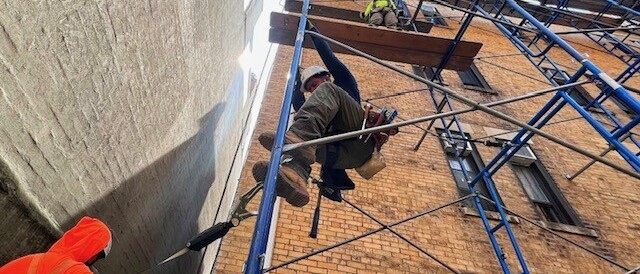
As both a general contractor and a construction manager, we adapt our delivery model to the project. General contracting suits clients who want a single point of accountability and a firm price; construction management suits owners who want transparency, early budget input, and a partner at the table through design. On many New York projects we blend the two, bringing preconstruction insight forward while still standing behind the schedule and the number.
What We Build Across New York City
We support a wide range of commercial and industrial project types, with deep concentration in interior and occupied-building work:
- Corporate offices and headquarters — tenant fit-outs, full-floor renovations, and repositioning of Class A space
- Retail — street-level storefronts and multi-tenant environments with compressed schedules
- Hospitality — renovations, upgrades, and brand refreshes in operating hotels and restaurants
- Pharmaceutical and life sciences — controlled environments, regulated upgrades, and complex MEP coordination
- Warehouses and distribution — industrial facilities and logistics space
- Data centers and mission-critical — power and cooling coordination and high-reliability builds
- Specialty interiors — fast-track renovations inside fully operational buildings
A Borough-by-Borough Approach to New York Construction
No two boroughs build the same way. Logistics, permitting timelines, building stock, and community expectations all shift across the city, and a contractor who treats New York as one uniform market quickly runs into trouble. Here is how we approach each.
Manhattan
Manhattan is the most logistically unforgiving environment in the country. Tight or nonexistent staging, restricted delivery windows, sidewalk-shed requirements, and high-rise material handling through shared freight elevators define nearly every job. Much of our Manhattan work is interior fit-out and repositioning in occupied Class A towers, where coordination with building management and base-building systems matters as much as the construction itself. We plan deliveries down to the half-hour and sequence work so neighboring tenants barely notice we are there.
Queens
Queens spans everything from industrial and distribution space to commercial interiors and institutional work. Its scale and diversity reward a builder who can move between project types and manage trucking, laydown, and access across very different site conditions. We bring the same disciplined logistics planning to a Long Island City office build-out that we bring to a warehouse near the airports.
Staten Island
Staten Island work tends toward retail, commercial, and institutional projects with their own access and community considerations. We apply the same planning rigor and field leadership across the borough, scaling our approach to projects that may have more room to stage but no less need for tight schedule control.
Brooklyn
Brooklyn blends dense commercial corridors, adaptive reuse of older industrial buildings, and a growing base of office, retail, and hospitality clients. Curbside coordination, narrow streets, and legacy building conditions are the recurring challenges. Our teams are comfortable working through the surprises that come with older structures and aligning schedules around active neighborhoods and street-level businesses.
The Bronx
The Bronx is a center of industrial, healthcare, and multifamily-adjacent commercial activity. Projects here often involve coordination with institutional owners and operations teams, phased work in occupied facilities, and careful management of utilities and infrastructure in older building stock. Our experience with shutdown planning and zero-surprise sequencing is a direct fit.
Beyond the five boroughs
Our New York team regularly delivers projects across Long Island, Westchester County, and the Hudson Valley — including Rockland, Orange, Sullivan, and Greene Counties. From navigating street closures in Manhattan to managing suburban developments in Westchester or industrial work across the Hudson Valley, we bring region-specific expertise to every project.

Built for New York's Regulatory Environment: DOB, OSHA, and SCA
New York carries some of the strictest construction-compliance requirements in the nation, and falling short of them stops a job cold. We build our preconstruction and field operations to operate cleanly within these frameworks.
NYC Department of Buildings and Local Law 196.
Under Local Law 196 of 2017, construction and demolition workers at any job site that requires a Site Safety Plan must complete 40 hours of Site Safety Training (SST) and carry a valid SST Worker card, while supervisors must complete 62 hours and hold an SST Supervisor card. These sites — generally those large enough to require a Construction Superintendent, Site Safety Coordinator, or Site Safety Manager — cannot lawfully admit untrained workers, and employers who ignore the rule face steep DOB penalties. We treat SST compliance, permit sequencing, and Site Safety Plan coordination as non-negotiable starting points, not afterthoughts.
OSHA standards.
Federal OSHA requirements sit beneath the city's rules. SST cards are built on OSHA 10-hour and OSHA 30-hour construction courses, with dedicated training hours for fall protection — consistently the leading cause of construction fatalities nationwide. We hold our crews and subcontractors to these standards and carry safety culture into daily planning, toolbox talks, and site supervision.
NYC School Construction Authority (SCA).
Public-school and other SCA-governed work adds a further layer. Contractors must complete the SCA's prequalification and certification process before they can bid, pay New York State prevailing wages with certified payroll submitted through the SCA's labor-compliance system, meet MWLBE participation goals, and follow heightened safety, documentation, and coordination protocols for work in and around active school buildings alongside the Department of Education.
Working in Occupied, Live, and High-Stakes Environments
A major portion of New York work happens inside existing buildings, around active tenants, and on top of legacy infrastructure. We are experienced in conditions that demand careful sequencing and zero-surprise coordination, including overbuilds and renovations in occupied spaces; complex utility work such as shutdown planning, tie-ins, redundancy, and phased cutovers; coordination with building management, base-building systems, and property operations teams; after-hours work, noise mitigation, and tenant protection; detailed material-handling plans involving elevators, loading docks, sidewalk sheds, and street deliveries; and the safety and cleanliness standards expected in Class A environments. In New York, success is defined by how well a team manages constraints — access, logistics, building rules, and schedule — without sacrificing quality.
Why Clients Choose Plescia in New York
- Deep experience working in occupied, high-traffic environments
- Proven ability to manage tight NYC construction schedules
- Strong relationships with local subcontractors and trades
- Fluency in DOB regulations, permits, and Local Law 196 compliance
- Ability to execute in Class A buildings and complex facilities
- Transparent communication and proactive problem-solving
Selected New York Project Experience
- 218 West 18th Street, New York, NY is a commercial interiors project serving the office market sector. 218 West 18th Street spans 25,000 square feet. 218 West 18th Street was executed using a fast track delivery method.
- 450 West Broadway, New York, NY is a commercial interiors project serving the hospitality market sector. 450 West Broadway spans 40,000 square feet. 450 West Broadway was executed using a fast track delivery method.
- Reiss, New York, NY is a commercial interiors project serving the retail market sector. Reiss spans 5,000 square feet. Reiss was executed using a fast track delivery method.
- Google, 118 8th Avenue, New York, NY is a commercial interiors project serving the office market sector. Google spans 225,000 square feet. Google was executed using a fast track delivery method.
- Squarespace, New York, NY is a commercial interiors project serving the office, roof deck, and facade market sectors. Squarespace spans 100,000 square feet. Squarespace was executed using a fast track delivery method.
Frequently Asked Questions
What does a commercial general contractor in New York City do?
A commercial general contractor manages and delivers the physical construction of a commercial project — coordinating subcontractors and trades, handling permits and inspections, managing the budget and schedule, and serving as the single point of accountability from groundbreaking through closeout. In New York, that role also means navigating DOB requirements, Local Law 196 site-safety compliance, building-management coordination, and the city's demanding logistics.
What is the difference between a general contractor and a construction manager in New York?
A general contractor typically commits to a defined scope and price and is responsible for delivering the work, often after design is complete. A construction manager is brought in earlier as the owner's partner, providing budgeting, scheduling, and constructability input during design and managing the build with greater transparency. Plescia offers both in New York and frequently blends them, bringing preconstruction insight forward while still standing behind the schedule and cost.
Do New York City construction sites require Site Safety Training (SST)?
Yes. Under Local Law 196, workers at NYC job sites that require a Site Safety Plan must complete 40 hours of Site Safety Training and carry an SST Worker card, and supervisors must complete 62 hours and hold an SST Supervisor card. Workers without valid SST credentials cannot enter these sites. We build SST compliance into every applicable project from day one.
What areas of New York does Plescia serve?
From our Midtown Manhattan office, we serve all five boroughs — Manhattan, Brooklyn, Queens, the Bronx, and Staten Island — along with Long Island, Westchester County, and the Hudson Valley, including Rockland, Orange, Sullivan, and Greene Counties, extending toward the Albany corridor.
How do I hire a commercial general contractor in Manhattan?
Start by confirming the contractor's experience with your specific project type and building class, their DOB and Local Law 196 compliance, their licensing and insurance, and references from comparable New York projects. The best fit is a builder who plans logistics beyond the walls — deliveries, staging, building-management coordination, and schedule — and communicates proactively. You can reach our New York team directly to discuss your project.
How much does commercial construction cost in New York City?
New York is among the highest-cost construction markets in the country, and the true cost of any project depends on scope, building class, site conditions, schedule, and the level of finish. Rather than quote a misleading per-square-foot figure, we provide a detailed, transparent estimate during preconstruction so you can make informed decisions and avoid surprises. Reach out for a project-specific budget conversation.
Let us know how we can help.
Contact our New York team to discuss your project. Plescia Construction and Development is licensed, insured, and bonded.