


Commercial General Contractor San Antonio
San Antonio, Texas Commercial General Contractor
San Antonio is one of Texas’s most distinctive commercial construction markets, shaped by its strong military presence, historic preservation requirements, environmentally sensitive aquifer zones, rapid suburban expansion, and strict development rules tied to water quality and site protection. Commercial general contractors in San Antonio must navigate unique regulations across city, county, and regional agencies, along with complex permitting workflows designed to protect the Edwards Aquifer and San Antonio’s cultural assets.
Edwards Aquifer, Water Quality Protection, & Environmental Regulations
One of the most influential factors affecting commercial development in San Antonio is the Edwards Aquifer Recharge and Contributing Zones. Projects located within these areas must meet stringent environmental and water-quality controls, including:
- Impervious cover limitations to reduce runoff and protect water infiltration
- Enhanced stormwater treatment systems such as bio-retention basins and filtration ponds
- Groundwater protection plans reviewed by the Edwards Aquifer Authority
- Stringent drainage requirements to prevent contamination of sensitive recharge areas
- Limitations on certain types of high-risk commercial uses
These requirements dramatically influence site planning, stormwater engineering, material selection, and long-term maintenance obligations.
Zoning, Overlays & Historic Preservation
San Antonio has detailed zoning overlays and historic preservation rules that heavily influence commercial development. Contractors must consider:
- Neighborhood Conservation Districts (NCDs) that regulate architectural character
- Historic Design Review for projects near the River Walk, King William District, Southtown, and Downtown
- Form-based zoning areas emphasizing pedestrian design and street activation
- Airport hazard overlays affecting height and lighting regulations
- Special drainage and watershed overlays along tributaries of the San Antonio River
Large commercial or mixed-use projects often require review by the Historic and Design Review Commission (HDRC), especially in urban-core districts.
Military Influence: Joint Land Use & Development Restrictions
With major military installations—including Joint Base San Antonio (Fort Sam Houston, Lackland AFB, Randolph AFB)—San Antonio imposes special development considerations such as:
- Joint Land Use Study (JLUS) guidelines for noise, flight paths, and height restrictions
- Anti-terrorism force protection (ATFP) standards for federal/military-adjacent developments
- Lighting and glare limits near aviation corridors
- Emergency access requirements for high-security zones
Contractors must incorporate these military-interface conditions early in site planning and design.
Soil Conditions, Foundation Design & Geological Challenges
San Antonio’s geology shifts across the region—from rocky Hill Country formations to clay-dominant soils on the East Side. Commercial construction must respond with:
- Pier foundations drilled into limestone for Western San Antonio sites
- Subgrade stabilization where clay soils create shrink–swell risks
- Rock excavation that affects cost and schedule in Hill Country zones
- Advanced geotechnical testing to properly design structural systems
Soil variability is one of the most cost-critical aspects of San Antonio construction.
Permitting Processes & Multi-Agency Review
Commercial permitting in San Antonio requires coordination across several departments and regulatory bodies. Typical projects must coordinate with:
- San Antonio Development Services Department (DSD) for plan reviews and building permits
- SAWS (San Antonio Water System) for sewer, water capacity, and backflow approvals
- Edwards Aquifer Authority for water-protection compliance
- San Antonio River Authority (SARA) for drainage and watershed requirements
- TxDOT for projects near state roads such as Loop 1604, I-10, and I-35
- San Antonio Fire Department for life-safety reviews
Complex developments often require multi-round reviews and integrated engineering responses.
Construction Logistics, Access, & Regional Challenges
Due to its rapid growth, San Antonio presents significant construction logistics considerations:
- Traffic congestion along major loops and corridors affecting deliveries
- Restricted staging areas in Downtown, Pearl District, and Broadway corridor
- Utility coordination delays with CPS Energy, SAWS, and telecom carriers
- Seasonal weather variability including flash floods and extreme heat
- Railroad adjacency issues requiring additional approvals in industrial zones
Commercial Development Trends in San Antonio
San Antonio continues to expand across key commercial sectors:
- Healthcare construction driven by regional population growth
- Industrial and logistics development along I-35 and I-10
- Mixed-use and urban infill in Midtown and Downtown
- Hospitality and entertainment supporting the tourism economy
- Manufacturing expansion linked to aerospace, bioscience, and defense sectors
These conditions make San Antonio a core market for large-scale, long-term commercial investment.
Key Resources
- San Antonio Development Services Department
- San Antonio Water System (SAWS)
- Edwards Aquifer Authority
- San Antonio River Authority
- Texas Commission on Environmental Quality
- Engineering News-Record
Plescia Construction & Development Services
Plescia Construction & Development supports commercial clients throughout San Antonio with a comprehensive suite of services, including:
- General Contracting
- Construction Management
- Commercial Development
- Design Management


Commercial General Contractor Elizabeth New Jersey
Elizabeth, New Jersey Commercial General Contractor
Elizabeth is one of the most strategically important commercial hubs in the Northeast—home to major transportation infrastructure, large-scale industrial development, retail power centers, and rapidly evolving urban redevelopment districts. As New Jersey’s fourth-largest city, Elizabeth combines dense urban neighborhoods, some of the state’s most active industrial corridors, extensive port-related development, and a growing commercial ecosystem supported by Newark Liberty International Airport and the Port Newark–Elizabeth Marine Terminal.
With direct access to Newark Liberty International Airport, the Port Newark–Elizabeth Marine Terminal, I-95 (New Jersey Turnpike), Route 1&9, and multiple NJ Transit lines, Elizabeth offers a rare combination of logistical advantage and redevelopment opportunity. Commercial general contractors must be able to navigate a high-density environment, strict environmental regulations, industrial remediation requirements, and a complex municipal permitting structure.
For builders, Elizabeth presents a technically demanding but opportunity-rich commercial construction market.
Commercial Districts & Development Zones in Elizabeth
Elizabeth’s commercial landscape spans several distinct development zones:
- Elizabethport – active redevelopment with waterfront improvements, mixed-use construction, adaptive reuse, and industrial-to-commercial conversions.
- Downtown Elizabeth – retail, restaurant, office, and institutional construction along Broad Street and the Midtown district, including historic-building restoration.
- Jersey Gardens / Port-Adjoining Zone – one of the most active retail and industrial districts in the region, anchored by The Mills at Jersey Gardens and extensive warehouse/logistics development.
- Aviation Plaza Area – big-box retail, hotel development, restaurants, and high-traffic roadway engineering requirements.
- Industrial North Elizabeth – distribution centers, manufacturing facilities, cold storage, and port-facing infrastructure.
- Keighry Head & Westminster neighborhoods – small-scale commercial, mixed-use infill, and main-street improvements.
Each submarket requires different zoning strategies, utility coordination, environmental analysis, and site-planning approaches.
Zoning, Permitting & Regulatory Requirements
Elizabeth’s development framework requires careful coordination with local, county, state, and federal entities. Core regulatory components include:
- Elizabeth Planning Board – site plans, building massing, façade design, circulation, pedestrian access, and landscape standards;
- Board of Adjustment – use variances, height adjustments, setbacks, and other zone exceptions;
- NJDEP environmental permitting – extensive requirements for brownfields, flood zones, stormwater, and waterfront development;
- Army Corps of Engineers – for waterfront construction, shoreline reinforcement, or port-adjacent improvements;
- Union County Planning Board – for projects affecting county roads or drainage basins;
- Port Authority of NY/NJ – for airport-area and port-adjacent improvements;
- Traffic & access management – required for nearly all roadway-intensive projects near Routes 1&9, 439, and North Avenue;
- Redevelopment plans – extensive use of designated redevelopment areas with project-specific requirements.
Because of Elizabeth’s industrial history, large-scale environmental remediation—including soil removal, vapor mitigation systems, and groundwater controls—is often required for commercial projects.
Infrastructure & Engineering Challenges
Elizabeth’s large commercial projects frequently involve significant engineering and infrastructure considerations, including:
- Brownfield cleanup for former manufacturing sites and port-adjacent properties;
- Flood-zone engineering for areas near the Arthur Kill and Elizabeth River;
- Stormwater compliance under New Jersey’s latest green-infrastructure regulations;
- Aging utilities & capacity upgrades in older neighborhoods and commercial corridors;
- Traffic management in high-volume corridors near Jersey Gardens, Route 1&9, and the Turnpike;
- Large-footprint building requirements for warehouses, logistics centers, cold storage, and aviation-adjacent development;
- High-security coordination for port or airport-related construction.
Developments near the airport require special attention to FAA height restrictions, glare mitigation, and noise-sensitive mechanical design.
Commercial Sectors Driving Development in Elizabeth
Elizabeth’s commercial growth spans multiple industries, each contributing to construction demand:
- Industrial & logistics – warehousing, distribution, fulfillment centers, and cold storage driven by port activity;
- Retail & hospitality – with major power centers, malls, and airport-adjacent hotels generating continual renovation and new construction;
- Airport-related commercial services – including hotels, parking facilities, rental-car hubs, and operations buildings;
- Mixed-use redevelopment – especially in Elizabethport and Downtown;
- Restaurant & service-sector growth – small business buildouts across Broad Street and surrounding corridors;
- Institutional construction – schools, public buildings, and community facilities.
The city’s ongoing revitalization and proximity to New York continue to attract developers seeking well-positioned commercial sites with strong multimodal access.
Plescia Construction & Development in Elizabeth
Plescia Construction & Development delivers the specialized experience necessary to navigate Elizabeth’s industrial, urban, and port-adjacent construction environment. Our services include:
- General Contracting for industrial, retail, hospitality, mixed-use, office, medical, and institutional projects;
- Construction Management including logistics coordination, subcontractor management, inspections, and safety compliance;
- Commercial Development offering feasibility studies, preliminary budgeting, entitlement strategy, and agency coordination;
- Design Management integrating architecture, civil engineering, environmental studies, and utility coordination.
Whether constructing a warehouse near the port, renovating retail space around Jersey Gardens, delivering a hotel near the airport, or managing a downtown adaptive reuse project, Plescia Construction & Development provides the technical capability and regional insight needed for successful commercial construction in Elizabeth.
Managing Multi-Purpose Construction Projects with Essex County Construction Manager
Essex County business owners are now going big on multi-use developments! They want shops, offices, and homes in one single spot to make buildings more intelligent and life easier for their customers. Considering all of these aspects under one roof, the project requires innovative design and careful management to build. Reading this blog will let you know how Essex County Construction Managers manage such projects while ensuring that each purpose of the building is fully functional.
How Essex County Construction Managers Assist in Managing Multi-Purpose Construction Projects?
1. Detailed Project Planning and Coordination
Although every construction project requires planning and coordination when working with projects that offer multiple purpose requires extra planning and coordination. Planning multi-purpose construction projects in Essex County involves
- Understanding the purpose of the building.
- Where to start.
- When to add each facility.
- How can each facility contribute to the other and more?
Construction Managers start by creating a comprehensive project plan that outlines every phase of construction, designing each functional area—shops, office suites, and residential flats. With the help of architects, engineers, and other specialists, they integrate diverse requirements into a plan. Addressing the project planning with the coordination of all the specialists helps to avoid conflicts between different functions and ensures that the project adheres to timelines and budget constraints.
2. Streamlined Communication Channels
Good communication is vital to any building project, especially when it’s for different uses. In Essex County construction managers make sure everyone involved, like owners, contractors, tenants, and suppliers, communicates in a clear and respectable manner with each other. This openness solves problems quickly, keeps the project moving smoothly, and avoids any mix-ups or hold-ups.
3. Advanced Design and Technology Integration
Construction Managers utilize advanced design approaches and technology to respond to the varied requirements of multipurpose properties. They produce intricate 3D models of the building using Building Information Modeling (BIM), which enables accurate visualization and modifications before the start of construction.
This technology enables the early detection of possible problems, maximizes the use of available space, and guarantees that the design satisfies all functional specifications. The building’s operational efficiency and sustainability are improved by incorporating smart technologies and energy-efficient systems.
4. Comprehensive Quality Control and Safety Measures
Prioritizing safety and quality sets a good foundation for successful multi-purpose construction projects. Essex County Construction Managers implement quality control measures and standard procedures to oversee every aspect of the construction process.
They conduct regular inspections while enforcing adherence to building codes and standards and manage the quality of materials and workmanship. Safety protocols are also strictly followed to protect workers and future occupants. Maintaining high quality and safety standards ensures the building is durable, functional, and compliant with all regulations.
End Note
Essex County Construction Managers are equipped to handle these demands by ensuring that every aspect of your building’s design and functionality is planned and executed. From comprehensive project planning to advanced technology integration and rigorous quality control, their dedication ensures that your multipurpose property fulfills what you aim to do with it.
Get in touch with Plescia Construction and Development to start your project and turn your multi-functional space idea into a reality!
learn more
Data Centers and Technology Facilities: Representing the Future with Plescia’s Essex County Construction
Gone are the days of manual record-keeping. Every bit of information is now usually stored in robust machines in a data center. To keep the machines performing at their best, Plescia Essex County construction managers help build robust data centers and tech facilities that are not just buildings but fortresses for your invaluable data. How are we the best managers for it? Well, read on to know.
How Does Plescia Offer the Best Essex County Construction for Data Centers?
1. Cutting-Edge Design and Architecture
Plescia begins the process of such facility construction with a cutting-edge design and architecture that minimizes the space and ensures efficient operation. Our designs incorporate advanced cooling systems to manage server-generated heat, secure access controls to protect sensitive areas, and modular layouts to accommodate future expansions. We add these elements into the design to ensure each facility is both functional and scalable, adapting to the evolving needs of technology.
2. Advanced Technology Integration
Plescia integrates the latest technology into data center construction, including cutting-edge server racks, energy-efficient cooling systems, and smart building automation. This integration boosts performance and efficiency, keeping up with the latest tech standards and improving your data center’s overall functionality.
3. Value Engineering
At Plescia, we believe in the power of value engineering to deliver cost-effective solutions without sacrificing quality. Our approach is centered on continuous evaluation to ensure that your data center project stays on budget while still meeting the highest standards of functionality and performance. Our Essex County Construction has the right balance that maximizes efficiency and value for your investment.
4. Ongoing Trade Coordination
Throughout the construction phase, Plescia’s teams conduct ongoing trade coordination facilitated by regular on-site meetings. We actively track Submittals, Requests for Information, 2 Week Look Ahead, and Schedules via Procore to ensure transparency and efficient project management
5. Robust Security Measures
When it comes to safeguarding your data, Plescia’ Essex County Construction doesn’t just meet the standard; it redefines it. Our measures include biometric access controls, high-resolution surveillance cameras, fire suppression systems, and redundant power supplies. With Plescia’s security solutions, you can be free from all worries by knowing your data is shielded from unauthorized access, natural disasters, and other threats.
6. Energy Efficiency and Sustainability
Plescia places a significant focus on energy efficiency and sustainability in building your data centers due to growing worries about the environmental impact. We use renewable energy sources and energy-efficient technology like LED lighting, high-efficiency cooling systems, and LED lighting.
Plescia also designs buildings with optimal energy utilization in mind to help you reduce operating expenses and carbon emissions. Our focus on environmentally friendly techniques improves the data center’s sustainability over time while also benefiting the environment.
End Note
Plescia’s Essex County Construction sets the standard for building state-of-the-art data centers and technology facilities that support the future of digital infrastructure. Our holistic approach protects your most valuable asset: the data.
Contact us to start your project and build a future-ready facility with Plescia!
learn more
Role of Union County Construction Managers in Modernizing Hospitality Venues
The tourism industry is always changing to satisfy demanding customers and keep up with new trends. Hotels, resorts, and restaurants are engaging places that create memories, not just somewhere to stay or eat. The Plescia’s Union County construction managers specialize in managing such property construction. Their proficiency in modernizing hospitality spaces ensures that these areas are updated according to modern aesthetics and optimized for both guest comfort and functionality.
How Union County Construction Managers Modernize Hospitality Venues?
The construction managers play a significant role in the evolution of hospitality venues in Union County. Read on to know more about:
1. Including Design Trends
Construction Managers keep themselves informed about the latest design trends in hospitality venues. This helps them to create projects that reflect modern aesthetics. They incorporate sleek, contemporary, open-concept layouts, minimalist décor, sustainable materials, and innovative lighting solutions. These help to create such spaces and venues that have great ambiance.
2. Guest Comfort and Functionality
Modernizing hospitality venues is not just about looks; it also largely depends on functionality and guest comfort. Union County construction managers emphasize upgrading amenities such as climate control systems, soundproofing, and ergonomic furnishings. They ensure that space usage is well-optimized while ensuring that rooms and common areas are designed for maximum comfort and convenience that can make the guest experience more fun and relaxing.
3. Integrating Smart Technology
To keep yourself connected with modern trends, it’s essential for hospitality venues to be integrated with smart technologies. Construction managers are well-informed about such requirements, and they have adapted to incorporate such advanced technological solutions into their construction projects. They promote the use of smart lighting and temperature controls, high-speed lifts, and digital concierge services. Using such advanced technologies ensures that venues provide an ideal and high-tech experience that meets the expectations of travelers and guests.
4. Focusing on Sustainability and Eco-Friendly Practices
As now people have become more aware of the importance of sustainable practices, using sustainable practices in the hospitality industry has become a significant consideration. Plescia’s Union County Construction managers understand such demands and promote using sustainable building materials, energy-efficient systems, and water conservation systems in their projects. Their commitment to green building practices helps reduce hospitality venues’ environmental footprint and attracts eco-conscious guests.
5. Redesigning Layouts and Functional Spaces
Another critical aspect of modernizing hospitality venues is layouts and structures that can offer flexibility, functionality, privacy, and comfort. When dealing with such projects, the Union County construction managers carefully inspect and asses layouts and make strategic modifications that help to enhance the usability and operations.
They may redesign lobbies to enhance the experience of entering the venue, creating large dining halls that can serve large groups and additional meeting space for more private sessions. This helps ensure that the venue can suit various guest’s requirements and preferences.
End Note
Union County construction managers use modern design, cutting-edge technology, sustainability, and thoughtful functionality to improve the standards of hotels, resorts, and restaurants. Their expertise can transform your property into a space that wows and satisfies your customers.
Reach out to us to get a free consultation.
learn more

Why Somerset County General Contractor Prioritize Integrated Project Delivery (IPD)
Have you ever wondered how Somerset County General Contractors keep their projects according to the timeline and ensure that the project is completed within the decided period?
Well, the answer lies in their project delivery method. Integrated Project Delivery or IDP is an approach that integrates people, systems, business structures, and practices into a process that collaboratively harnesses the talents and insights of all participants to optimize project results, increase value to the owner, reduce waste, and maximize efficiency through all phases of design, fabrication, and construction.
How Does Somerset County General Contractor Integrated Project Delivery (IPD) Approach Benefits Project Construction?
1. Enhanced Collaboration and Communication
Integrated Project Delivery (IPD) encourages the collaboration of all stakeholders involved in the project. Unlike traditional project delivery methods, IPD is a highly integrated approach where architects, engineers, contractors, and owners work as a single team to meet the project goals and scope.
It minimizes the risk of misunderstandings and conflicts while leading to smoother project execution and quicker decision-making. For General Contractors, this collaborative environment assists in reducing delays and promoting more efficient workflow that ultimately leads to timely project completion.
2. Improved Cost Efficiency and Budget Management
For more precise and thorough planning, IPD promotes the early involvement of important stakeholders, such as suppliers and cost estimators. Somerset County General Contractors ensure cost savings and stay clear of expensive revisions or rework later in the project by including this strategy from the start.
With such an approach, everyone gets inspired to work toward minimizing expenses and maximizing value by the shared financial risk. This cooperative approach to budget management helps guarantee that projects stay within allocated funds.
3. Project Scheduling and Timely Delivery
By prioritizing the Integrated Project Delivery model, Somerset County General Contractors can develop a detailed and realistic project schedule that accounts for potential risks and delays. Integrated Project Delivery promotes efficient scheduling and active management of project timelines. Closely monitoring progress and coordinating efforts helps ensure that projects are completed on time, meeting deadlines and client expectations.
4. Higher Quality Outcomes and Reduced Waste
The IDP approach deeply focuses on optimizing the construction process by leveraging the collective expertise of all team members which results in high-quality outcomes as potential design flaws or construction issues are identified and addressed early in the project. The emphasis on efficiency and waste reduction in IPD reduces material wastage and improves sustainability.
5. Increased Client Satisfaction and Value
Client satisfaction in the decision-making process ensures that their needs and preferences are addressed throughout the project. Somerset County General Contractors prioritize IPD because it allows them to deliver projects that align closely with client expectations and provide greater value. This approach helps build strong client relationships and reinforces the contractor’s reputation for delivering successful projects.
End Note
Somerset County General Contractors distinguish themselves by adopting the Integrated Project Delivery (IPD) approach for project delivery. This innovative method not only ensures that projects are completed on time and within budget but also elevates the overall construction experience for everyone involved.
Looking for GC’s that follow the same approach? Contact Plescia Construction and Development team today!
learn more

Role Of Wind-Resistant Design in Union County Construction Projects
Having a high-raised building poses several risks not just among its residents but also people living around the building. Especially in the place Union County with the high occurrence of hurricanes and climatic disasters, it becomes essential to create a wide resistant design for the Union County construction project. Why? Let’s take a look at it in detail.
How Wind-Resistant Design Affects Union County Construction Projects?
1. Enhanced Structural Stability
In Union County hurricanes and tornadoes frequently occur and these smart design choices help in fighting against structural failure. Wind-resistance design is important for creating buildings that are strong against high wind pressure. Incorporating aerodynamic shapes helps engineers and architects ensure that these buildings slice through the wind rather than letting it push them around. They reduce the risk of collapse by keeping both the building and its occupants safe and sound.
2. Improved Safety for Residents
The primary goal of wind-resistant design is to protect the people living within the building. Adding features like impact-resistant windows, a secure roofing system, and reinforced walls in the Union County construction project helps to prevent debris from penetrating the building and causing injuries. Strong anchoring systems make sure that the building remains firmly attached to its foundation by reducing the risk of being displaced or toppled during severe weather events.
3. Reduced Property Damage
Wind-resistant design is like giving your building a strong shield against storms. Plescia’s engineers use special materials and building methods that can handle strong winds so things like roofs, windows, and walls stay intact while maintaining their integrity during a big storm. Using high-quality materials reduces the need for many repairs or maintenance later on. For property owners in Union County, this means saving money in the long run and keeping your building in great shape over time.
4. Compliance with Building Codes and Regulations
Comparable to many other areas vulnerable to extreme weather, Union County has building laws and regulations that require wind-resistant construction methods. Following these guidelines is essential for obtaining the required permissions and making sure the construction complies with safety regulations. Construction projects that use wind-resistant design components not only adhere to local standards but also enhance the community’s general adaptation to natural disasters.
5. Increased Property Value and Marketability
Buildings designed to resist wind often have higher property values and attract more buyers. In places like Union County where extreme weather is a worry buyers prefer homes that offer extra protection and strength. A design that can withstand strong winds is a big plus making the property more appealing and helping it keep its value over time.
End Note
Investing in wind-resistant design is not just about building strong structures, instead, it is about creating a safe durable, and valuable property. In Union County, where severe weather is a regular challenge, these smart design choices for Union County construction projects protect both people and investments.
Contact us today to learn how we can integrate advanced wind-resistant features into your building plans.
learn more

Commercial General Contractor Sugar Land Texas
Sugar Land, Texas Commercial General Contractor
Sugar Land is one of the most strategically planned and economically robust cities in Greater Houston. With its strong municipal oversight, master-planned developments, strict design guidelines, and extensive drainage and flood-control requirements, Sugar Land presents a highly structured environment for commercial general contractors. Development must be aligned with the City’s long-term land-use, mobility, and infrastructure plans, while also coordinating with Fort Bend County, Municipal Utility Districts (MUDs), and various special-purpose districts.
Zoning, Land-Use Planning & Development Standards
Unlike many parts of Greater Houston, Sugar Land has a fully developed zoning code that shapes commercial construction across its districts. Contractors must navigate:
- Planned Development (PD) zoning districts with highly customized standards
- Architectural and site design requirements specific to major corridors
- Use regulations tailored to office, industrial, medical, or commercial centers
- Overlay districts along US-59, SH-6, University Blvd., and major commercial nodes
- Restrictions within master-planned communities such as Telfair, First Colony, and Riverstone
Sugar Land’s zoning structure demands early coordination with planning staff to ensure project compatibility and avoid redesigns.
Master-Planned Community Design Controls
Much of Sugar Land’s commercial land is located inside master-planned developments with their own design oversight bodies. These controls may include:
- Color palette and façade material restrictions
- Signage limitations to maintain consistent visual identity
- Landscaping, buffering, and screening requirements
- Parking lot design standards
- Enhanced lighting and pedestrian connectivity rules
Design review committees can impact both schedule and scope, making pre-submittal meetings critical.
Drainage, Detention & Flood-Control Requirements
Sugar Land and Fort Bend County enforce strict drainage and detention standards due to regional flood risks. Commercial projects must comply with:
- Fort Bend County Drainage District criteria
- City of Sugar Land engineering standards for stormwater and grading
- Atlas 14 rainfall requirements increasing detention needs
- SWPPP regulations for stormwater pollution prevention
- Stormwater quality treatment in sensitive zones
Detention sizing and stormwater design heavily influence site development and feasibility.
Utility Districts, Capacity Planning & Infrastructure Coordination
Sugar Land’s utilities are supported by a mix of City-managed services and independent MUDs. Contractors must plan for:
- MUD capacity approvals for water and wastewater
- Developer agreements for utility extensions or oversizing
- Lift station coordination in low-lying areas
- Dry utility planning with CenterPoint and telecom providers
- Traffic and access permitting for major arterials
MUDs may require additional engineering, board approvals, and longer lead times.
Soil Conditions, Sitework Challenges & Foundation Design
Sugar Land’s geology includes the expansive clay soils characteristic of the Gulf Coast. Contractors often must address:
- Post-tensioned slabs designed for shrink–swell cycles
- Pier-supported foundations in variable soil zones
- Soil stabilization using lime or cement treatments
- High water table issues affecting excavation
- Engineered grading plans to maintain drainage performance
Permitting Processes & Multi-Agency Review
Commercial permitting in Sugar Land is notably structured and requires detailed submittals. Typical review authorities include:
- City of Sugar Land Planning & Development Services
- Engineering Department for public works, utilities, and drainage
- Fort Bend County Engineering
- TxDOT for access to regional highways
- MUD board reviews for utility service agreements
- Fire Marshal’s Office for life-safety approvals
Projects along US-59, SH-6, and University Blvd. often face additional traffic-impact evaluations.
Commercial Development Trends in Sugar Land
Sugar Land continues to advance across key commercial sectors, including:
- Class-A office development around Sugar Land Town Square
- Healthcare expansion driven by Houston Methodist and Memorial Hermann
- Retail and entertainment in Telfair and First Colony
- Industrial and logistics growth near US-90A and the Brazos River corridor
- Corporate campuses tied to energy, chemical, and technology companies
Construction Logistics & Access
Sugar Land’s busy commercial routes and ongoing development require coordinated logistics planning. Contractors must prepare for:
- Traffic congestion on SH-6, US-59, and University Blvd.
- Limited staging space in redeveloped or infill areas
- Utility relocation timelines with CenterPoint Energy
- Strict noise and work-hour restrictions near residential zones
- Pedestrian safety measures near entertainment and retail districts
Key Resources
- City of Sugar Land
- Fort Bend County
- Harris County Flood Control District (regional reference)
- Texas Commission on Environmental Quality
- Engineering News-Record
Plescia Construction & Development Services
Plescia Construction & Development provides full-service commercial construction expertise throughout Sugar Land and Fort Bend County, including:
- General Contracting
- Construction Management
- Commercial Development
- Design Management
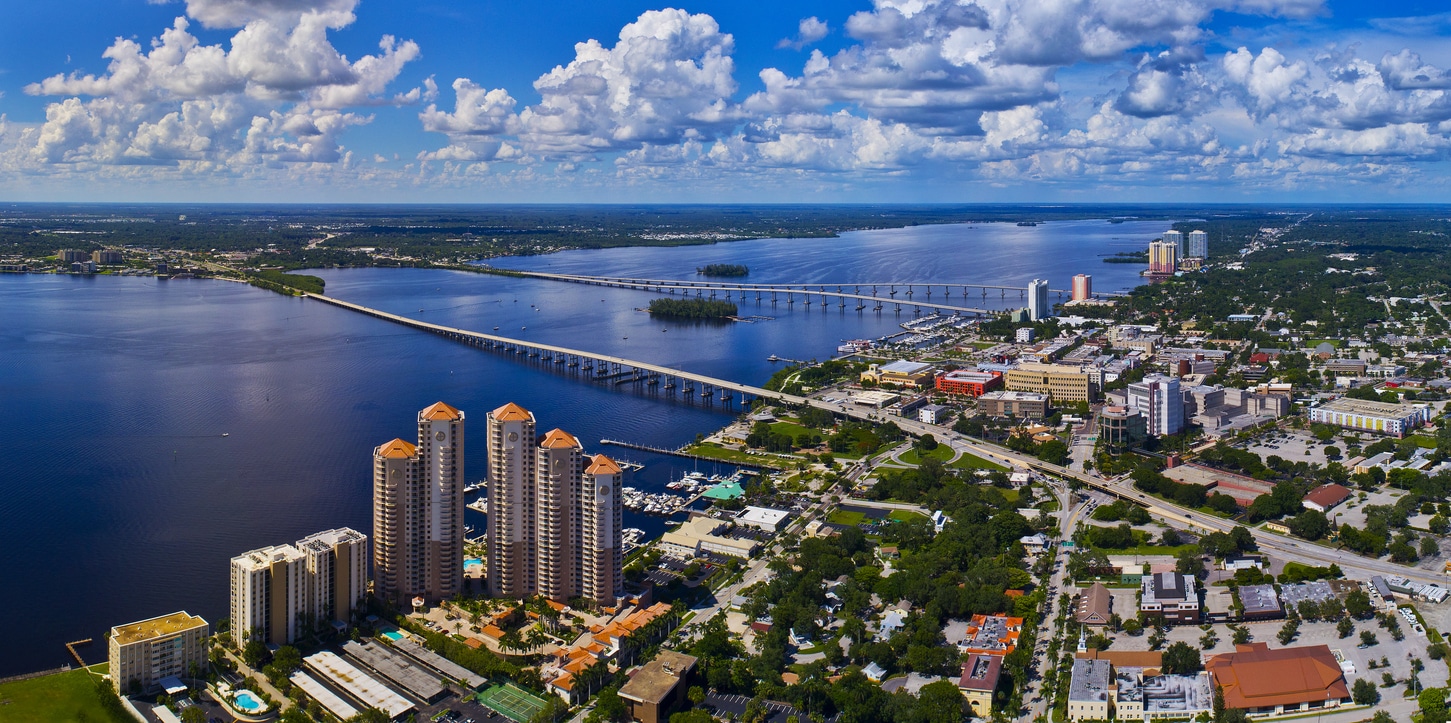
Commercial General Contractor Fort Myers Florida
Fort Myers, Florida Commercial General Contractor
Fort Myers has rapidly become one of the most active commercial construction markets in Southwest Florida, shaped by post-hurricane redevelopment, significant population growth, infrastructure expansion, and heightened demand in hospitality, healthcare, industrial, and mixed-use sectors. Commercial general contractors working in Fort Myers must navigate a complex landscape of coastal construction rules, floodplain regulations, environmental review, zoning overlays, insurance-driven resiliency standards, and evolving permitting processes at both the City of Fort Myers and Lee County levels.
Hurricane-Resistant Building Codes & Resiliency Requirements
Fort Myers operates within stringent hurricane-resiliency standards enforced by the Florida Building Code and local amendments. After Hurricane Ian, many requirements tightened, driving higher expectations for durability and impact resistance. Commercial contractors must account for:
- Enhanced wind-load engineering with design pressures often exceeding 170–180 mph
- Impact-resistant glazing and storefront systems throughout commercial districts
- Structural upgrades for roof systems, mechanical equipment anchoring, and lateral bracing
- Water intrusion protection, including envelope hardening and below-grade waterproofing
- Backup power planning for medical, hospitality, and critical-use facilities
These requirements significantly influence pricing, material sourcing, scheduling, and subcontractor coordination.
Floodplain, Stormwater, & Coastal Zone Development Constraints
Fort Myers includes multiple FEMA flood zones, especially near coastal waterways, the Caloosahatchee River corridor, and the barrier island edge. Commercial projects often require:
- Elevated finished-floor elevations to meet FEMA and city standards
- Stormwater retention and exfiltration systems designed for seasonal rainfall volumes
- Hydrologic studies when sensitive wetland areas are impacted
- Dry floodproofing for retail, mixed-use, and office structures
- Coordination with the South Florida Water Management District (SFWMD) for environmental approval
Brownfield redevelopment along older commercial corridors may also trigger soil remediation or environmental monitoring.
Post-Hurricane Redevelopment & Market Trends
The Fort Myers region is still undergoing massive reconstruction and modernization following the impacts of Hurricane Ian. Current trends affecting commercial contractors include:
- High redevelopment volume of damaged structures—especially hotels, retail centers, and older Class B/C office buildings
- Increased insurance requirements affecting project design and MEP specifications
- Adaptive reuse opportunities for existing buildings that require structural reinforcement and modernization
- Demand for elevated mechanical equipment and redesign of rooftop or platform-based MEP systems
- Supply-chain constraints for windows, roofing components, and specialty materials
These conditions require contractors to anticipate longer timelines and build resilient schedules that account for inspections, materials, and engineering revisions.
Zoning, Overlays & Development Regulations
Fort Myers’ zoning framework includes mixed-use overlays, riverfront redevelopment zones, suburban commercial corridors, and environmentally sensitive districts. Key zoning factors affecting commercial development include:
- Downtown River District design requirements governing height, façade design, parking ratios, and pedestrian access
- Commercial corridor redevelopment rules along US-41, Colonial Boulevard, and Cleveland Avenue
- Traffic impact study requirements for large commercial projects
- Signage limitations and architectural review in gateway districts
- Mandatory landscape buffers and tree-preservation guidelines
Contractors must also coordinate closely with City Planning during site-plan review to avoid re-submittals that can delay schedules by weeks or months.
Permitting Processes & Review Timelines
Commercial permitting in Fort Myers requires layered approvals, often involving:
- City of Fort Myers Community Development (site plan review, architectural approval, zoning clearance)
- Lee County Permitting for regional components
- SFWMD for stormwater and wetland considerations
- FDOT for roadway access along state-managed corridors
- Fire Marshal review for life-safety compliance
High-volume redevelopment has increased review times, making early coordination essential. Contractors must also strategically plan inspections due to fluctuating demand and staffing constraints throughout the region.
Site Logistics & Construction Challenges
Fort Myers’ commercial landscape presents several logistical considerations:
- High water table requiring dewatering, soil stabilization, or foundation redesign
- Limited staging areas in dense urban or river-adjacent sites
- Traffic congestion along Colonial Boulevard, Daniels Parkway, and US-41
- Utility coordination with FPL, LCEC, and expanding telecom providers
- Seasonal tourism traffic that can restrict delivery windows
Contractors must develop detailed logistics plans that integrate transportation schedules, crane operations, safety perimeters, and strict stormwater controls.
Key Resources
- City of Fort Myers
- Lee County Community Development
- South Florida Water Management District
- Florida Building Code
- Engineering News-Record (ENR)
Plescia Construction & Development Services
Plescia Construction & Development supports Fort Myers with comprehensive commercial construction capabilities, including:
- General Contracting
- Construction Management
- Commercial Development
- Design Management

Commercial General Contractor Sullivan County NY
Sullivan County, New York Commercial General Contractor
Sullivan County, New York—stretching from the Delaware River communities of Barryville and Callicoon to the fast‑growing tourism and resort hubs of Monticello, Liberty, and Fallsburg—presents one of the most unique commercial construction environments in the Hudson Valley and Catskill regions. The county blends rural landscapes, environmentally sensitive water‑shed areas tied to the New York City water supply system, legacy resort districts, revitalizing village centers, and emerging hospitality, ligh…
Economic Development Trends and Regional Growth Drivers
The Sullivan County Partnership for Economic Development highlights expanding sectors including tourism, hospitality, outdoor recreation, advanced manufacturing, food and beverage production, logistics, health care, senior living, and entertainment. The county’s development momentum accelerated following major investments such as Resorts World Catskills, the Kartrite Resort & Indoor Waterpark, and Mon…
Each subregion of Sullivan County exhibits distinct growth patterns:
- Monticello: The county’s commercial and civic hub, featuring large‑scale hospitality projects, retail redevelopment, logistics activity near major highway interchanges, and ongoing downtown revitalization efforts.
- Liberty: Redeveloping Main Street corridors, expanding small‑scale commercial uses, and light‑industrial projects along State Route 52.
- Fallsburg: Significant institutional, cultural, and seasonal‑population‑driven development tied to camps, retreat centers, and hospitality venues.
- Callicoon & Western Sullivan: Rural mixed‑use development, boutique hospitality, riverfront commercial uses, and adaptive reuse in historic hamlets with limited infrastructure.
- Wurtsboro & Mamakating: Development along the Route 209, Route 17, and Route 52 corridors, including logistics, retail, and suburban‑style commercial centers.
Major Commercial Corridors and Development Nodes
Route 17 (Future Interstate 86) Corridor
The Route 17 corridor—a major east‑west transportation spine scheduled for full upgrade to I‑86—anchors much of Sullivan County’s commercial and industrial development. Interchange‑adjacent areas near Monticello, Wurtsboro, and Liberty support hospitality, logistics, big‑box retail redevelopment, and mixed‑use projects serving both tourists and local businesses.
Key considerations for contractors include:
- Traffic‑impact and access‑management coordination with NYSDOT;
- Environmental review due to proximity to sensitive watersheds and wetlands;
- Utility‑capacity planning to support high‑demand projects like hotels and entertainment venues;
- Stormwater‑management constraints associated with steep slopes and major drainage systems.
Monticello Commercial District and Entertainment Zone
Monticello is undergoing multi‑phase redevelopment fueled by its entertainment and hospitality cluster. Projects include hotel expansions, workforce housing, retail modernization, event venues, food‑service facilities, and logistics activity tied to major regional employers.
Liberty, Fallsburg, and Route 52 Corridor
The Route 52 corridor supports both traditional retail and emerging institutional, cultural, and recreational developments. Construction patterns include adaptive reuse of older storefronts, façade improvements, and new commercial pads requiring enhanced access, utility upgrades, and modern building systems.
Delaware River Towns and Western Hamlets
Communities such as Callicoon, Narrowsburg, and Barryville emphasize design‑sensitive commercial development shaped by historic hamlet character, riverfront viewsheds, and limited infrastructure. Projects frequently require coordination with local Architectural Review Boards, historic‑preservation committees, and environmental review boards.
Stormwater, Watersheds, and Environmental Constraints
Sullivan County is one of the most environmentally regulated counties in New York State due to its location within and adjacent to key watersheds that serve the New York City drinking water system. Significant portions of the county lie within the Neversink, Mongaup, and Delaware River watersheds, as well as areas monitored by the NYC Department of Environmental Protection (DEP). These watersheds place strict limits on land disturbance, impervious surface creation, wastewater discharge, and stormwater runoff.
Projects disturbing more than one acre require full compliance with NYSDEC stormwater regulations, including:
- Stormwater Pollution Prevention Plans (SWPPPs);
- Erosion and sediment control for steep slopes;
- Peak-flow attenuation using detention or infiltration;
- Water-quality treatment targeting watershed-protection benchmarks;
- Enhanced protection for wetlands, streams, and riparian buffers.
Communities along the Delaware River and tributaries may experience floodplain development restrictions. Contractors must review FEMA flood maps early, especially in Callicoon, Narrowsburg, Barryville, and the Mongaup Valley.
Zoning, SEQR, and Local Regulatory Review
Sullivan County’s towns and villages each maintain their own zoning ordinances, resulting in a patchwork of policies ranging from strict watershed restrictions to flexible commercial districts near major corridors. Large hospitality, logistics, cannabis-processing, and institutional projects typically trigger the State Environmental Quality Review Act (SEQR), requiring detailed analysis of:
- Traffic and access along Route 17, Route 52, and Route 209;
- Stormwater and watershed impacts;
- Visual impacts, especially near scenic corridors and elevated terrain;
- Noise and lighting associated with hospitality and logistics uses;
- Historic and cultural resources, particularly in older hamlets.
Architectural Review Boards (ARBs) are active in hamlet districts such as Callicoon and Narrowsburg, where commercial construction must align with historic scale, façade character, signage standards, and material palettes.
Infrastructure Capacity and Utility Coordination
Infrastructure varies widely across the county. Only Monticello, Liberty, portions of Fallsburg, and certain resort zones provide robust water, sewer, and electrical capacity. Many western and northern areas depend on wells, septic systems, limited water pressure, and minimal three-phase electrical service.
General contractors must coordinate closely with water and sewer authorities, NYSEG, and municipal engineers regarding:
- Water-main extensions and fire-flow adequacy;
- Septic-system engineering or package-treatment plants for commercial users;
- Electrical upgrades for hotels, entertainment venues, or refrigeration-heavy facilities;
- Telecommunications capacity supporting modern hospitality and logistics operations.
Sullivan County Commercial Building Typologies
Hospitality, Resorts, and Tourism
Sullivan County’s tourism economy drives development of hotels, event venues, resorts, restaurants, and entertainment spaces. These projects often require specialized structural and MEP systems, large commercial kitchens, extensive back-of-house infrastructure, and stormwater/utility planning for large impervious areas.
Logistics, Manufacturing, and Light Industrial
Industrial development clusters along Route 17 and Route 209 corridors support warehousing, distribution, food and beverage production, and small-scale manufacturing. Facilities require efficient truck circulation, loading-dock layout, ESFR fire protection, and flexible interior space.
Mixed-Use, Retail, and Downtown Redevelopment
Monticello, Liberty, and various hamlets are seeing façade improvements, adaptive reuse, and infill development focused on strengthening village centers and supporting year-round residents and visitors.
Seasonal and Institutional Properties
Fallsburg and surrounding municipalities host numerous large institutional, cultural, and seasonal facilities, including camps and retreat centers. These projects demand unique logistical planning, peak-season operations coordination, and infrastructure upgrades.
Geotechnical Conditions and Site Engineering Challenges
Sullivan County’s geologic profile reflects its Catskills and Delaware River Valley setting, producing a diverse array of subsurface conditions that significantly influence commercial construction feasibility. Eastern areas near Wurtsboro and Mamakating sit on glacial deposits with mixed sands, gravels, and compacted till. Central municipalities such as Monticello, Liberty, and Fallsburg frequently reveal clay layers, seasonal high groundwater, and legacy fill near former industrial or resort-era properties. Western regions along the Delaware River, including Callicoon and Barryville, often feature shallow bedrock, fractured shale, and slope-heavy topography.
Common geotechnical considerations for contractors include:
- Test borings to determine soil bearing capacity and depth to bedrock;
- Groundwater control systems, including underdrains and sump pumps for deep excavations;
- Rock excavation, blasting permits, and vibration monitoring to protect nearby structures;
- Retaining walls and reinforced embankments for hillside construction;
- Soil stabilization for parking lots, drive aisles, and loading zones;
- Environmental remediation for brownfield or former resort sites.
Community Review, Cultural Considerations, and Public Engagement
Community engagement plays a major role in Sullivan County’s development trajectory. In hamlets with historic character—such as Callicoon, Narrowsburg, and Jeffersonville—residents and local boards maintain strong expectations for design-sensitive commercial buildings. Architectural Review Boards (ARBs) evaluate building massing, façade materials, signage, rooflines, lighting, and color palettes to ensure compatibility with traditional Catskills architectural themes.
Public hearings often raise concerns related to:
- Traffic increases along Route 17, Route 52, Route 209, and village streets;
- Stormwater impacts in watershed-sensitive locations;
- Visual impacts on scenic corridors, ridgelines, and river viewsheds;
- Noise, lighting, and late-night activity near hospitality or entertainment venues;
- Compatibility with small-town scale and historic storefront patterns.
Projects that incorporate context-sensitive architecture, strong landscaping strategies, and traffic or environmental mitigation measures tend to move more smoothly through the approval process.
Plescia Construction & Development’s Approach in Sullivan County
Plescia Construction & Development leverages deep experience across resort-driven economies, rural development environments, and environmentally sensitive landscapes. The firm applies tailored strategies to meet the county’s unique commercial demands:
Monticello Hospitality, Entertainment, and Mixed-Use Nodes
- Structural upgrades and MEP systems designed for large venues and high‑occupancy facilities;
- Traffic engineering and site‑circulation studies for entertainment‑district activity;
- Phased construction for active resort or hospitality operations;
- Flood‑resilient and watershed‑compliant stormwater solutions.
Liberty, Fallsburg, and Route 52 Commercial Redevelopment
- Adaptive reuse of aging storefronts and underutilized commercial buildings;
- Utility upgrades for restaurants, retail, and community facilities;
- Design coordination with ARBs and Main Street revitalization plans;
- Stormwater‑management retrofits for older lots with limited infiltration.
Western Sullivan (Callicoon, Narrowsburg, Barryville)
- Small‑scale retail, boutique hospitality, and mixed‑use development sensitive to historic hamlet character;
- Rock excavation and slope stabilization where topography requires it;
- On‑site wastewater and water‑supply engineering for low‑infrastructure zones;
- Coordination with riverfront, scenic, and preservation protections.
Industrial and Logistics Projects (17/209 Corridor)
- Clear‑span structures and loading‑dock configurations for logistics tenants;
- ESFR fire‑suppression systems and heavy‑duty pavement designs;
- Truck routing and circulation planning near I‑86 interchanges;
- Electrical and mechanical systems supporting manufacturing or cold‑storage uses.