


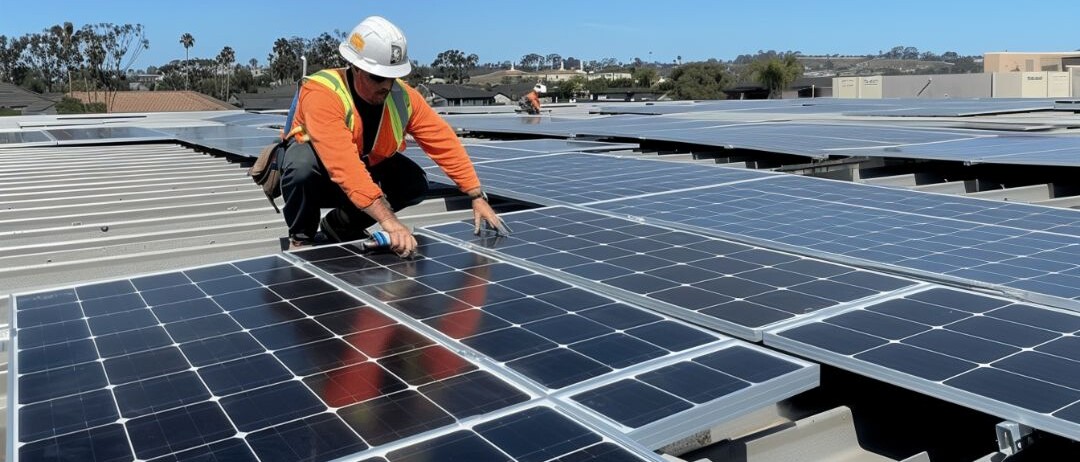
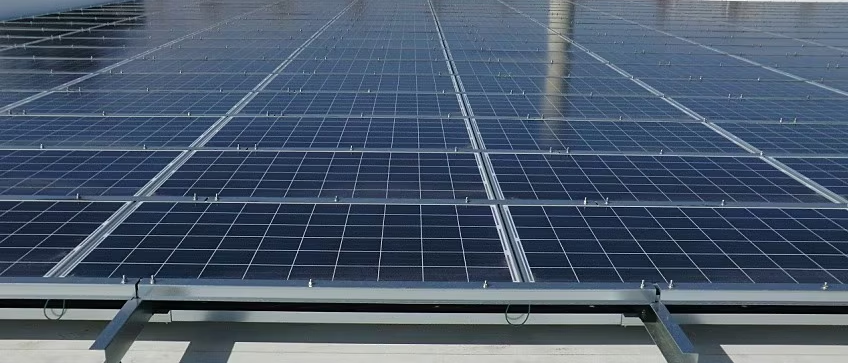
Installing solar energy systems on rooftops and other existing built assets requires a comprehensive evaluation of structural capacity, roof conditions, and overall building performance. Commercial and industrial solar installations must account for dead loads, live loads, wind uplift, and seismic forces to ensure that the structure can safely support the photovoltaic system. Roof age, membrane type, drainage, and waterproofing details must be carefully reviewed so that solar mounting systems integrate without compromising the building envelope or shortening the lifespan of the roof.
Successful solar construction also depends on seamless integration with existing electrical infrastructure. Power distribution, interconnection points, inverters, and monitoring systems must be coordinated with base building electrical systems to ensure safe, efficient energy transfer. Fire access requirements, code compliance, and utility coordination all play a critical role in system design and installation. Early coordination between structural, electrical, and roofing disciplines helps avoid conflicts and supports long-term system reliability.
Many commercial and industrial solar installations take place on occupied or fully operational facilities, adding complexity to planning and execution. Safety is a primary concern, particularly when work is performed at elevation. Access planning, fall protection systems, material staging, and crane or hoisting operations must be carefully coordinated to protect workers, occupants, and existing assets. Construction activities often need to be phased or scheduled during off-hours to minimize disruption to daily operations and maintain business continuity.
Sequencing solar installation work around ongoing facility operations requires detailed scheduling and clear communication with owners, facility managers, and tenants. Temporary shutdowns, electrical tie-ins, and roof access must be planned in advance to avoid unexpected interruptions. Maintaining clean, organized work areas and protecting finished surfaces and equipment are essential when working on active commercial and industrial sites. Proactive coordination helps ensure that renewable energy upgrades are delivered without impacting core operations.
We specialize in solar installations on existing commercial and industrial structures, with a focus on efficient integration and long-term building performance. Our experience includes rooftop solar systems across a range of building types, where preserving structural integrity and roof performance is essential. We prioritize constructability, coordination, and safety throughout the installation process, ensuring that renewable energy systems are installed correctly and perform as intended. The result is durable solar infrastructure that enhances energy efficiency, supports sustainability goals, and delivers long-term value without compromising the integrity or operation of the underlying building.