



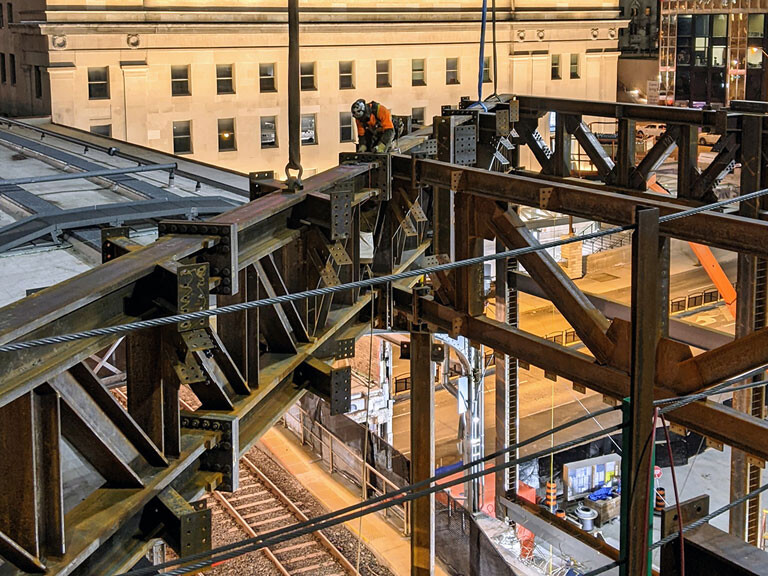
Overbuild Construction
Overbuild construction involves integrating new structures, systems, or expansions into existing buildings, requiring a high level of planning, coordination, and technical precision. Plescia Construction & Development delivers overbuild projects with a focus on understanding existing conditions, maintaining operational continuity, and executing work safely within constrained environments.
These projects are inherently complex—success depends on how well new construction is aligned with the structural, mechanical, and operational realities of the existing facility.
Evaluating Existing Conditions & Constraints
Every overbuild project begins with a detailed understanding of the existing building. Unlike ground-up construction, the starting point is not a blank slate, but a structure with its own limitations and unknowns.
Key considerations include:
- Structural capacity and load-bearing systems
- Foundation conditions and limitations
- Existing building envelope performance
- Mechanical, electrical, plumbing, and life safety infrastructure
Thorough investigation and documentation help identify constraints early, allowing for a clear and realistic construction strategy that minimizes risk and avoids costly surprises.
Structural Integration & System Tie-Ins
Overbuild construction requires careful coordination between new and existing structural and building systems. Maintaining the integrity of the original structure while introducing new loads and connections is a critical component of the work.
This involves:
- Designing and executing structural tie-ins and load transfers
- Coordinating new framing with existing systems
- Integrating new MEP infrastructure with existing distribution
- Sequencing work to maintain stability and safety throughout construction
Precision in these areas is essential to ensure that both the existing and new construction perform as intended.
Working Within Active Facilities
Many overbuild projects take place in occupied or fully operational buildings, where construction must be carefully managed around ongoing use.
Common challenges include:
- Limited access points and restricted work areas
- Active tenants, staff, or equipment within the building
- Coordination around existing systems that must remain operational
- Managing noise, vibration, and dust in sensitive environments
Execution requires a controlled approach to phasing, logistics, and site management, ensuring that construction progresses without disrupting daily operations.
Phasing, Protection & Risk Management
Because overbuild work directly interfaces with existing structures, risk management and sequencing are central to project success.
Typical strategies include:
- Temporary structural supports during modifications or additions
- Staged system shutdowns and tie-ins
- Protection of existing finishes, equipment, and occupied areas
- Rerouting of utilities to maintain service continuity
Detailed coordination across all trades helps ensure that each phase of work is completed safely and without unintended impacts to the building.
Project Types & Experience
Plescia Construction & Development delivers a range of overbuild and expansion projects, including:
- Vertical building expansions and additional floors
- Structural additions to existing facilities
- System upgrades and infrastructure expansions
- Repositioning projects requiring integration with existing construction
These projects often involve complex coordination between new and existing elements, requiring a disciplined and experienced approach to execution.
Built to Extend & Enhance Existing Assets
Overbuild construction allows owners to increase capacity and functionality without starting from the ground up. Success depends on how well new construction enhances the performance of the existing building.
Our approach prioritizes:
- Structural integrity and long-term reliability
- Seamless integration of new and existing systems
- Minimal disruption to ongoing operations
- Flexibility to support future modifications or expansion
This results in buildings that are not only expanded, but improved in performance and usability.
Execution Approach
Overbuild projects require a practical understanding of how buildings behave during construction, particularly when modifications are made to existing systems and structures.
We focus on:
- Coordinating structural and system integration with precision
- Managing sequencing to maintain safety and stability
- Maintaining clear communication with stakeholders and facility teams
- Delivering predictable outcomes in complex, constrained environments
By aligning construction strategy with real-world building conditions, we deliver overbuild projects that are efficient, controlled, and built to perform.