


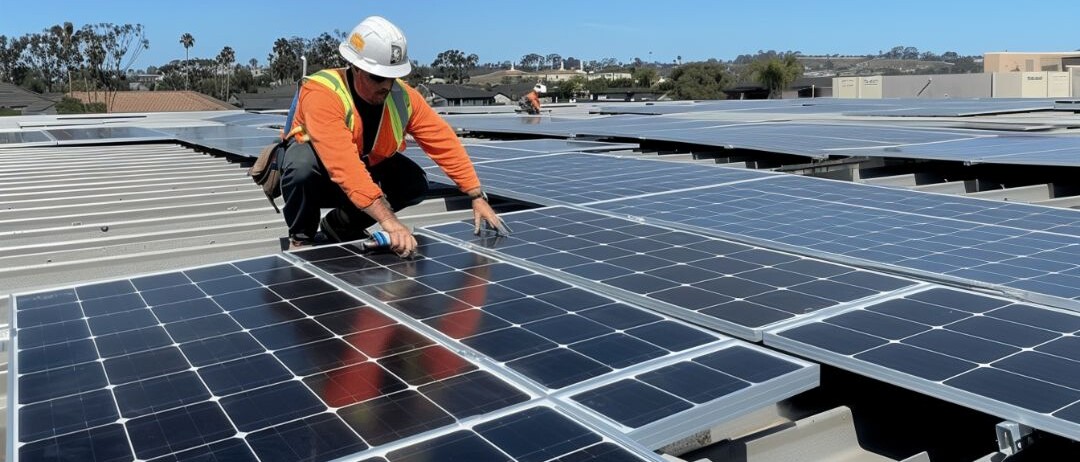
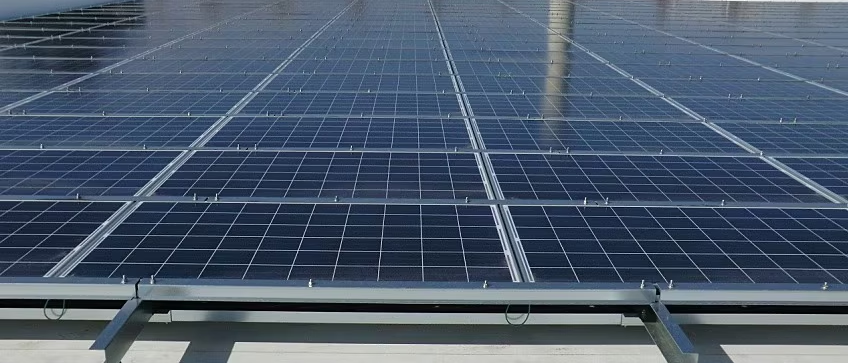
Commercial & Industrial Solar Installation
Solar installations on existing buildings require a careful balance between structural integrity, electrical integration, and long-term building performance. Plescia Construction & Development delivers commercial and industrial solar construction with a focus on integrating photovoltaic systems into existing assets without compromising the building itself.
These projects go beyond panel installation—they require coordination across structural systems, roofing assemblies, and electrical infrastructure to ensure safe, efficient, and durable performance.
Understanding Existing Building Conditions
Before any system is installed, the existing structure and roof must be evaluated to determine suitability for solar integration. Unlike new construction, these projects depend on the capacity and condition of the building already in place.
Critical factors include:
- Structural load capacity and framing limitations
- Wind uplift and environmental forces
- Roof condition, age, and membrane type
- Drainage patterns and waterproofing integrity
This upfront analysis helps prevent issues that could impact roof lifespan, structural performance, or system stability.
Connecting to Building Power Systems
Solar systems must work seamlessly with the building’s existing electrical infrastructure. Proper coordination ensures that generated power is safely distributed and monitored.
This process involves:
- Integrating with existing electrical distribution systems
- Locating and installing inverters and disconnects
- Coordinating utility interconnection requirements
- Implementing monitoring and control systems
Careful planning ensures compliance with codes while supporting efficient and reliable energy production.
Managing Work on Occupied Facilities
Most solar installations take place on active commercial and industrial properties, where operations continue throughout construction.
These environments require:
- Safe access to rooftops and elevated work areas
- Coordination of material handling and equipment placement
- Protection of existing building systems and finishes
- Minimizing disruption to occupants and daily operations
A controlled and organized approach ensures that work progresses without negatively impacting the facility.
Coordinating Around Operations
Solar installation often requires direct interaction with building systems, making scheduling and communication essential.
Important considerations include:
- Planning electrical tie-ins and shutdowns
- Coordinating work with facility schedules
- Managing access points and staging areas
- Maintaining clean and safe work conditions
Advance planning helps ensure that installation activities align with ongoing operations and business continuity.
Range of Solar Project Applications
Plescia Construction & Development delivers solar construction services across a variety of building types and project scopes, including:
- Rooftop solar systems on commercial buildings
- Installations on industrial and warehouse facilities
- Solar integration as part of building upgrades
- Projects requiring coordination with existing infrastructure
Each installation is approached with a focus on efficiency, safety, and long-term performance.
Supporting Long-Term Building Performance
Solar systems must be installed in a way that enhances the building without introducing risk. Long-term performance depends on how well the system integrates with the structure and roof.
Our approach emphasizes:
- Maintaining roof integrity and warranty protection
- Ensuring structural compatibility
- Providing safe access for future maintenance
- Supporting consistent system performance over time
Approach to Installation
Solar construction requires coordination across multiple disciplines and a clear understanding of existing building conditions.
Execution is centered on:
- Aligning structural, electrical, and roofing scopes
- Managing installation in active and elevated environments
- Maintaining safety and organization throughout the project
- Delivering consistent results across different facility types