



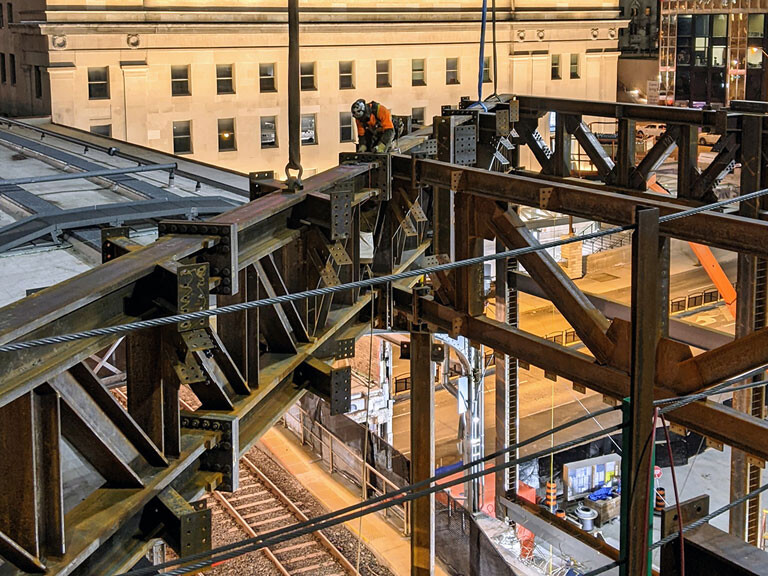
Overbuild construction projects require a comprehensive understanding of existing conditions before any work begins. These projects involve building new structures or systems on, within, or adjacent to existing facilities, making early investigation and documentation essential. Structural capacity, foundation systems, building envelopes, and existing mechanical, electrical, plumbing, and life safety systems must be carefully evaluated to determine how new construction can be safely and efficiently integrated. Thorough constructability analysis and risk management planning are critical to identifying constraints, mitigating unforeseen conditions, and establishing a clear execution strategy.
Because overbuild projects rely on existing buildings as a foundation, precision during design and construction is essential. Load paths, structural connections, and system tie-ins must be carefully engineered to maintain the integrity of the original structure while supporting new loads and functions. Sequencing decisions made early in the project can significantly impact safety, schedule, and cost, particularly when work interfaces directly with occupied or mission-critical areas. Early collaboration between engineers, contractors, and building owners helps align technical solutions with operational goals.
Many overbuild construction projects take place in fully operational environments, adding a significant layer of complexity to planning and execution. Facilities may remain occupied by tenants, staff, or equipment throughout construction, requiring creative phasing and logistical strategies. Work must often be sequenced around active systems, limited access points, and ongoing business operations. Maintaining safe access, controlling noise and vibration, and protecting existing finishes and equipment are essential considerations in these environments.
Protecting existing occupants, building systems, and critical infrastructure while integrating new construction demands detailed coordination across all disciplines. Temporary structural supports, system rerouting, and staged shutdowns may be required to safely complete tie-ins without disrupting operations. Clear communication with facility teams and stakeholders is essential to managing expectations and maintaining continuity. Safety remains a primary concern, requiring strict adherence to protocols, well-defined work zones, and continuous monitoring throughout the project.
We specialize in overbuild construction that seamlessly integrates new work with existing structures. Our experience includes complex building additions, vertical expansions, and system upgrades delivered within active facilities. By emphasizing detailed planning, disciplined execution, and proactive coordination, we help owners increase capacity and functionality while minimizing disruption. The result is high-performing expansions that extend the life and value of existing assets while supporting ongoing operations.