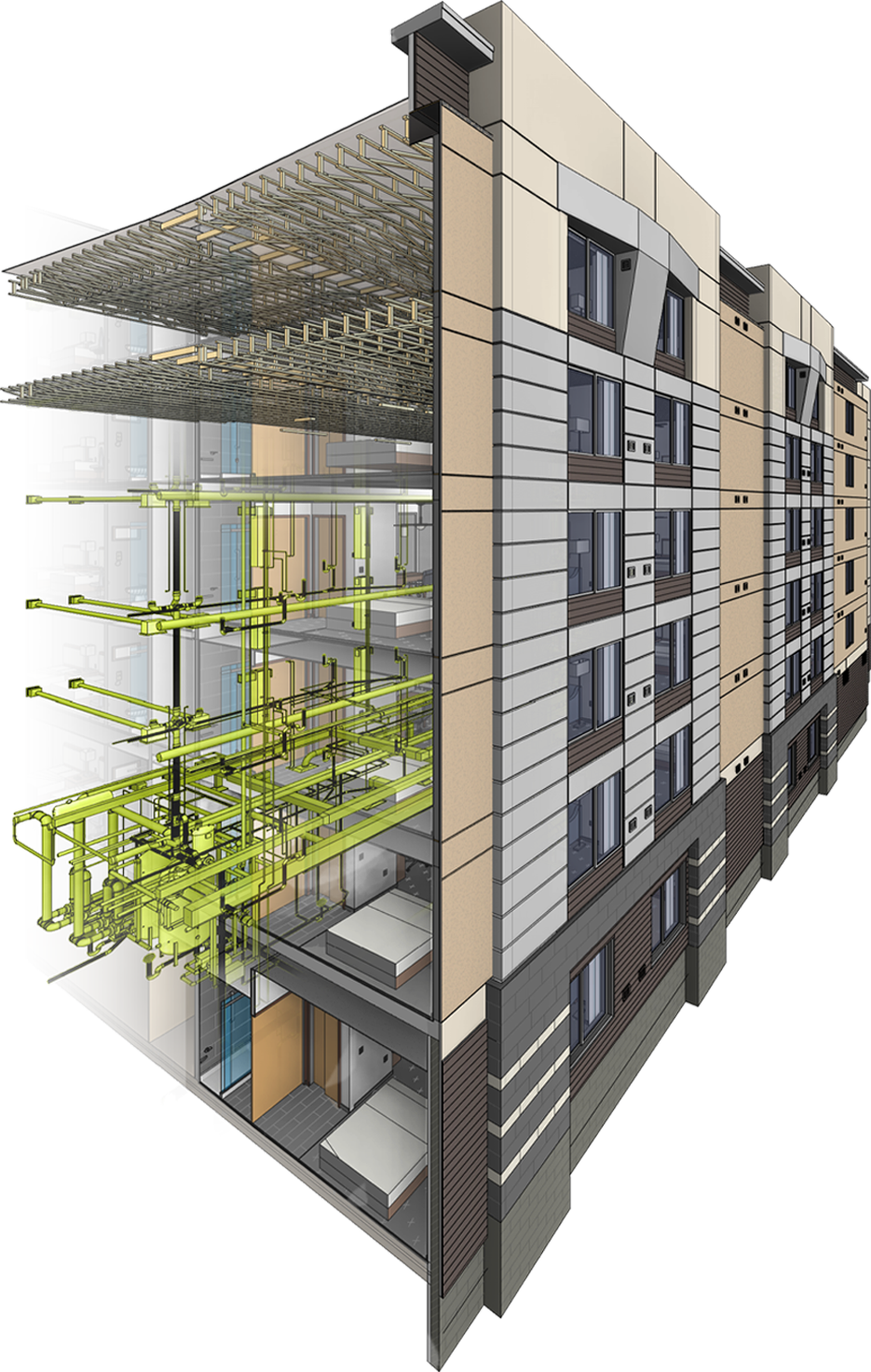


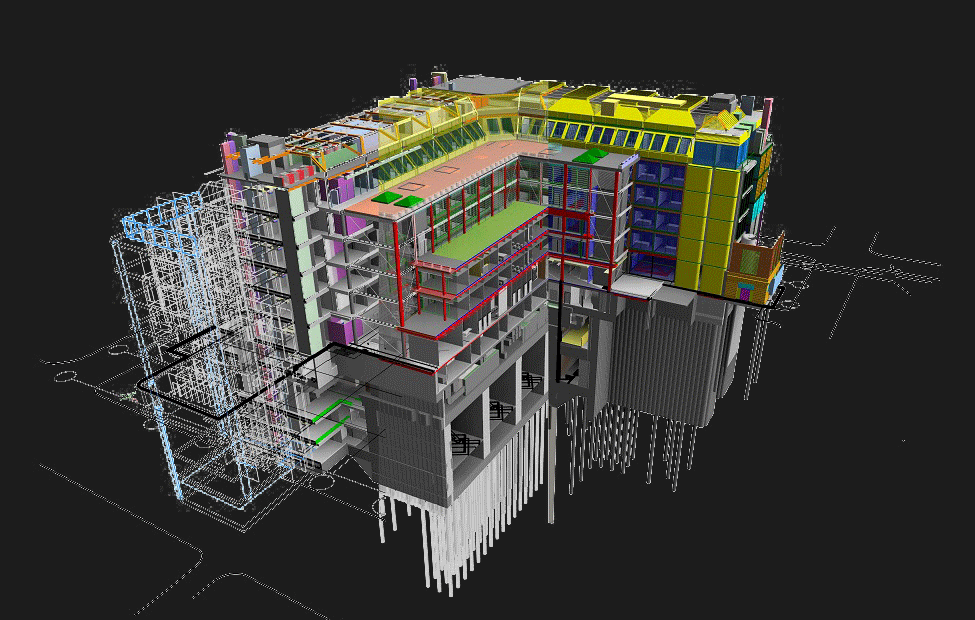
What BIM Means to Us
Building information modeling services use BIM as a digital representation of a project’s physical and functional components—architectural, structural, and MEP (mechanical, electrical, plumbing). But the real value comes from how it’s used: as a coordination platform that improves decision-making, reduces risk, and supports a smoother construction phase.
Why Proper Pre-Planning Makes BIM So Powerful
BIM delivers the most value when it’s integrated early. With strong preconstruction planning, BIM can:
- Reduce RFIs and change orders by resolving conflicts ahead of time
- Improve schedule reliability through better sequencing and fewer surprises
- Strengthen budget control by minimizing rework and disruption
- Create cleaner installs in MEP-heavy spaces through intentional routing
- Support faster, safer construction by planning access and work zones
- Improve communication—owners and design teams can “see” the plan, not just read it
A Coordination Tool That Protects Quality
At the end of the day, BIM helps us build with fewer surprises—and higher confidence. With the right upfront planning and disciplined coordination, BIM becomes a powerful advantage: clearer decisions, cleaner execution, and a smoother path from design to finished space.
When BIM Is Most Advantageous
BIM is especially valuable for projects with:
- Tight ceiling plenums and dense MEP systems
- Complex utilities, critical systems, or mission-critical environments
- Renovations/overbuilds in active buildings
- Strict milestone dates and fast-track schedules
- High coordination requirements across multiple trade partners
Our BIM Process
We approach building information modeling services as a structured workflow, tailored to the project’s needs and complexity:
Define the BIM Roadmap
We start by aligning the team on the purpose of BIM for the project—coordination level, model responsibilities, milestone dates, and required deliverables. As part of our building information modeling services, this includes defining:
- Model scope by trade and discipline
- Level of detail required for coordination
- Coordination cadence (weekly/bi-weekly, depending on phase)
- File exchange and model management standards
- Key constraints: ceilings, risers, equipment rooms, shafts, roof zones, etc.
Build and Combine Models
Through our building information modeling services, architectural, structural, and MEP models are created or refined (by designers and/or trade partners). We then federate models into a coordinated environment to review the building as a complete system—not isolated drawings.
Clash Detection & Coordination
Our building information modeling services identify conflicts early—before they turn into RFIs, field rework, and schedule delays. Coordination typically focuses on high-impact zones such as:
- Congested ceiling spaces and corridor runs
- Shafts, risers, and stacked utility paths
- Equipment rooms and rooftop mechanical zones
- Penetrations through structure and rated assemblies
- Clearances for access, maintenance, and code requirements
Resolve, Document, and Release to the Field
With building information modeling services, coordination decisions are documented and translated into action—updated drawings, coordinated shop drawings, approved routing, and installation sequencing that field teams can trust.
Support Installation, Phasing, and Turnover
Where appropriate, our building information modeling services also support:
- Phasing plans for occupied/operational spaces
- Material handling and access planning
- Prefabrication strategies (when beneficial)
- Clear closeout deliverables and accurate as-builts