



Plescia Construction & Development is a commercial general contractor and construction management firm building across Travis County — the heart of the Austin metro. From downtown’s technology-driven high-rise boom to the state Capitol complex, the University of Texas, the Domain, and the booming East Austin and South Congress districts, we build to the standard — and the Hill Country terrain and strict land-development rules — Central Texas demands.
Commercial Construction Across Travis County
Travis County holds the City of Austin and the core of its economy. Downtown anchors a technology, office, and high-rise boom; the Capitol and state agencies drive government work; the University of Texas anchors education and research; the Domain has become a ‘second downtown’ of office, retail, and residential towers; and East Austin and South Congress carry a thriving creative, hospitality, and adaptive-reuse market. Each of these asks something specific from a contractor, and we build to it.
Our Travis County work spans the full range of commercial space:
- Office and tech — Class A office, corporate campuses, and tech and creative space downtown, in the Domain, and across the corridors.
- Healthcare and life sciences — exam suites, imaging, and ambulatory space serving the Dell Medical School and the county’s health systems.
- Retail, restaurant, and hospitality — retail, dining, and hotels across downtown, South Congress, East Austin, and the Domain.
- Government, education, and institutional — civic, academic, and institutional space serving the state and the University of Texas.
- Adaptive reuse and mixed-use — creative, mixed-use, and adaptive-reuse work across the urban core.
Communities We Serve
We work throughout Travis County — downtown Austin and the Capitol complex, the University of Texas area, the Domain and North Austin, East Austin, South Congress, and the western Hill Country communities of West Lake Hills and Bee Cave. We work through the City of Austin and the surrounding jurisdictions.

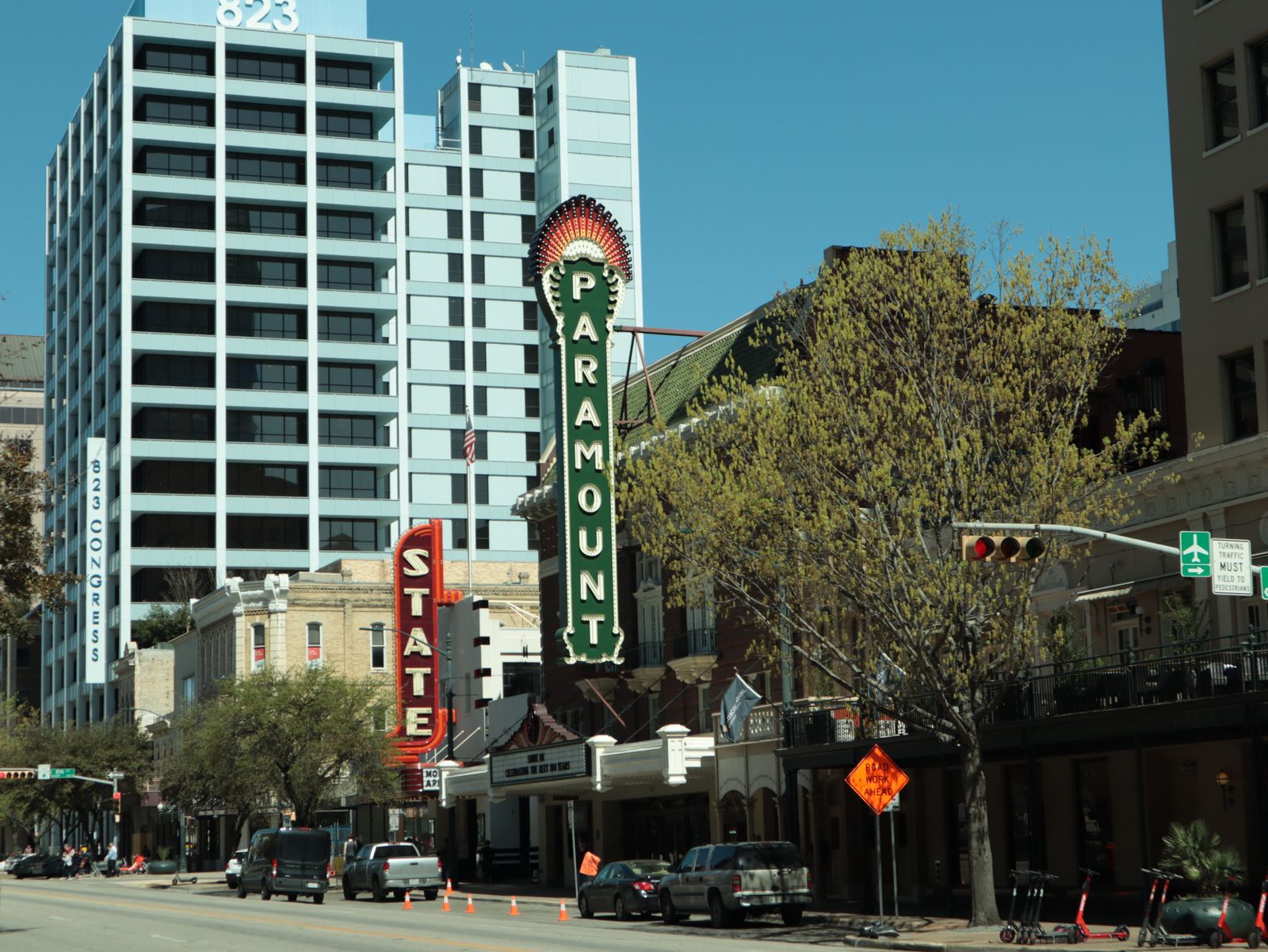
Permitting, Terrain, and Flood in Travis County
Travis County spans the Hill Country and the Balcones Escarpment — rocky limestone and karst to the west, expansive clay to the east — and sits squarely in Central Texas’s ‘Flash Flood Alley.’ Combined with the City of Austin’s strict land-development code, building here demands real local expertise. We manage permitting through the City of Austin and the county.
Several requirements shape commercial work here:
- Hill Country terrain and soils — limestone, karst, and expansive clay drive engineered foundations, rock excavation, and site-specific geotechnical design.
- Flash flooding — creeks like Shoal and Onion and the area’s flash-flood exposure make detention, drainage, and floodplain design central.
- Austin land-development code — the tree ordinance, impervious-cover limits, water-quality and Edwards Aquifer recharge rules, and detailed review make permitting demanding without local expertise.
- Urban and high-rise logistics — downtown’s tight, high-rise sites bring complex staging and phasing.
Planning for terrain, water, and Austin’s review process is what keeps a Travis County project on schedule.

How We Manage Risk on Travis County Projects
From a downtown tech office to a Domain mixed-use project or an East Austin adaptive-reuse, the same discipline applies: build to the terrain, flood, and code requirements, plan the logistics realistically, protect the businesses and tenants around the work, and keep life-safety systems live throughout. We coordinate deliveries, phasing, permitting, and inspections with owners, tenants, and the City of Austin, and we carry the insurance limits and trade relationships that Central Texas ownership expects.
Every job runs through a single point of accountability. Owners, tenants, building departments, and the design team work through one team that owns the schedule, the budget, and the safety plan — not a chain of subcontractors pointing at each other.
Representative Commercial Work
Plescia’s portfolio spans office, tech, healthcare, and mixed-use work of the kind Travis County demands. While every market has its own specifics, the discipline is the same one we bring to projects across our Texas, Florida, New York, and New Jersey markets: realistic schedules, transparent budgets, and a finished space that performs. We’re glad to walk prospective Travis County clients through relevant past work during an initial conversation.
A Commercial General Contractor With a Texas Presence
Plescia’s Houston office anchors our Texas presence, and we bring that same accountability to Travis County clients, backed by a firm that builds across multiple markets. Whether you’re a tech tenant downtown, a developer in the Domain, or a hospitality operator on South Congress, we’d welcome the conversation.
Frequently Asked Questions
Which areas does Plescia serve in Travis County?
We build throughout the county — downtown Austin and the Capitol complex, the University of Texas area, the Domain and North Austin, East Austin, South Congress, and the western communities of West Lake Hills and Bee Cave.
Does Plescia build tech and office space in downtown Austin and the Domain?
Yes. Downtown anchors a technology and high-rise boom, and the Domain has become a ‘second downtown’ of office and mixed-use towers — we build Class A office, tech, and creative space across both.
How do terrain and flash flooding affect Travis County projects?
Travis County spans Hill Country limestone and karst and eastern clay, in the heart of ‘Flash Flood Alley,’ so engineered foundations, rock excavation, and serious detention and drainage are central to the work.
How does Austin's land-development code affect permitting in Travis County?
The City of Austin enforces a strict code — tree ordinance, impervious-cover limits, and Edwards Aquifer and water-quality rules — with detailed, sometimes slow review. We plan for it from the start.
Does Plescia do healthcare work for the Dell Medical School?
Yes. The Dell Medical School anchors a growing healthcare and life-sciences sector, and we build exam suites, imaging, and ambulatory space to the standards those uses require.