



Our Rigging Equipment
We have the equipment on hand to take on a wide range of lifts and moves:
- Cranes from 23 to 250 tons – from compact units suited to tight sites and lighter lifts up to heavy-lift capacity;
- Tractor trailers – to transport equipment and materials to and from the site;
- Flatbed trailers – for hauling large, heavy, or oddly shaped loads; and
- Complex rigging machinery – the equipment needed to facilitate difficult moves where a crane alone is not the answer.
What to Consider When Choosing Commercial Rigging
The most important questions to answer before a lift or move:
- The load – its true weight (including rigging gear), dimensions, and center of gravity;
- The crane and its capacity at the working radius – a crane’s rated capacity applies close to the machine, and drops as the boom extends or the load is set farther away;
- The site – ground conditions, outrigger or mat requirements, overhead obstructions, nearby power lines, and room to set up and swing;
- Access and transport – the route, bridge and road limits, and any permits needed to bring equipment and loads in;
- The people and the plan – a written lift plan, qualified operators, riggers, and signal persons, and clear communication; and
- The contractor – insurance, safety record, and documented experience with loads like yours.


Technical Specifications and Requirements by Type
Cranes (23 to 250 ton)
- Capacity is read from the manufacturer’s load chart for the specific boom length, radius, and configuration — not from the crane’s headline tonnage;
- Ground bearing – outriggers concentrate the crane’s weight and the lift load onto small pads, so crane mats or engineered support are often required, especially over slabs, utilities, or soft soil;
- Clearances – overhead lines must be kept at the minimum distances set by OSHA (at least 10 feet for lines up to 50 kV, and more at higher voltages) unless the lines are de-energized and grounded;
- Wind and weather – lifts follow the crane manufacturer’s wind limits and are paused when conditions are unsafe; and
- Standards – crane work on construction sites falls under OSHA 29 CFR 1926 Subpart CC, with ASME B30.5 covering mobile cranes.
Rigging Hardware and Lifting Devices
- Slings, shackles, hooks, and spreader or lifting beams must be rated above the load, inspected before use, and used within their working load limits (see ASME B30.9 for slings and B30.26 for rigging hardware);
- Sling angle matters — the shallower the angle from horizontal, the more tension each leg carries; and
- Lifts of heavy, high-value, or hard-to-replace loads typically call for a more detailed, engineered lift plan.
Tractor Trailers and Flatbed Trailers
- Weight and size limits – loads that exceed legal weight, width, height, or length limits need oversize or overweight permits and may need escorts and route planning;
- Securement – cargo must be blocked, chained, or strapped in accordance with federal cargo securement rules (FMCSA, 49 CFR Part 393); and
- Loading and unloading – the pick and set locations need adequate space, firm ground, and a plan for how the load will be lifted on and off.
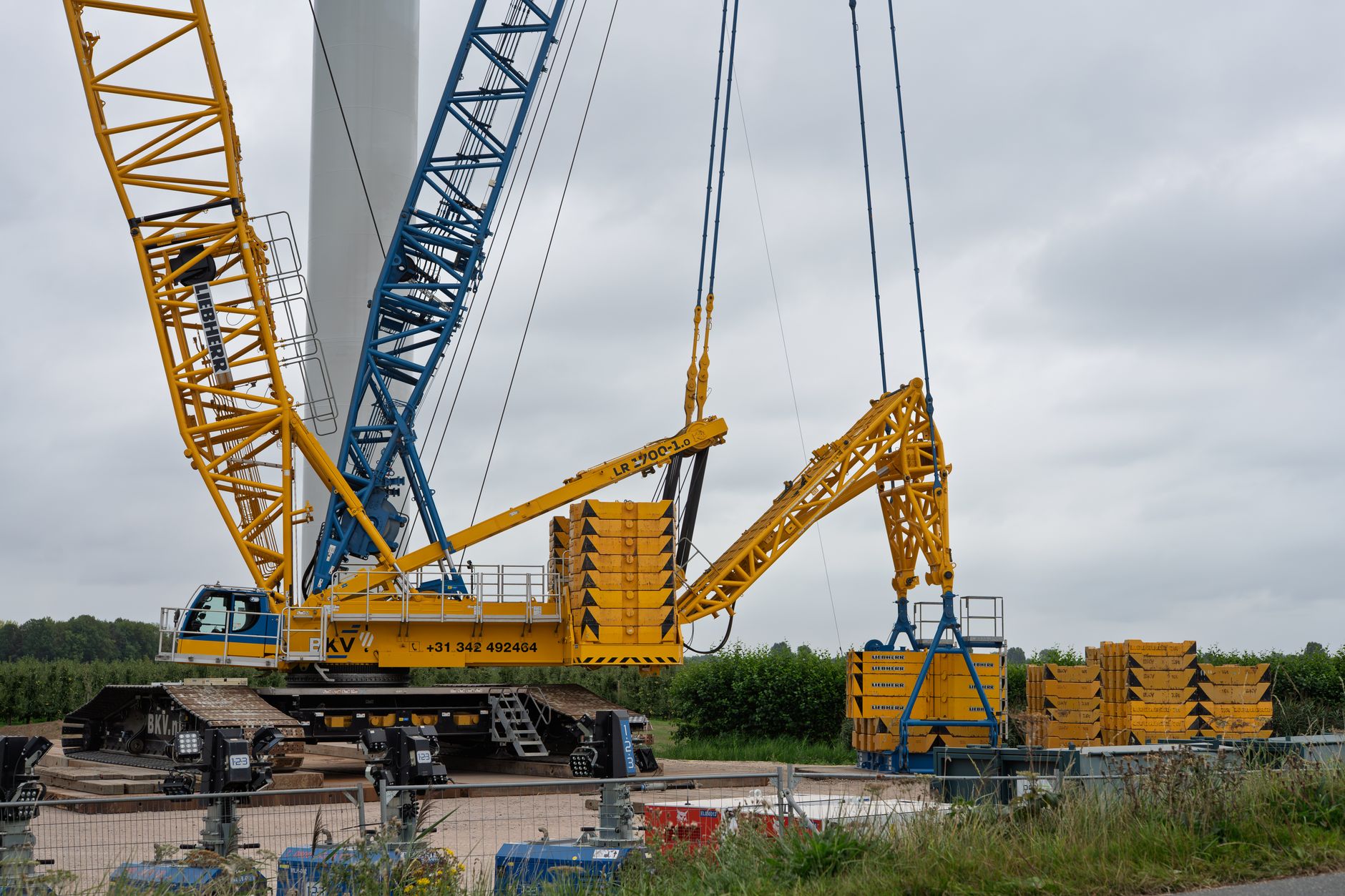
Rigging Expertise and Experience
Rigging well takes more than equipment. It takes planning, communication, and the judgment to know when a lift is routine and when it needs an engineered plan. Plescia Construction & Development brings the experience of a commercial general contractor with more than 20 years in the field, and because we manage the construction as well as the rigging, lifts are scheduled around the rest of the project — not in spite of it.
Frequently Asked Questions
What size cranes does Plescia have?
We have cranes ranging in size from 23 to 250 tons, along with tractor trailers, flatbed trailers, and complex rigging machinery to facilitate moves.
What should I look for when choosing a commercial rigging contractor?
Look at the equipment and its capacity at the working radius, the contractor’s lift planning and qualified personnel, insurance and safety record, and experience with loads and sites like yours.
What information is needed to plan a lift or equipment move?
The load’s weight, dimensions, and center of gravity; where it is picked and where it will be set; site access, ground conditions, and overhead obstructions; and the schedule. The more complete the information, the more accurate the lift plan and the quote.
Does Plescia also haul equipment?
Yes. In addition to cranes, we have tractor trailers and flatbed trailers to transport equipment and materials, and the rigging machinery to facilitate complex moves.
Is rigging part of Plescia's construction services?
Yes. Plescia is a commercial general contractor, so rigging is coordinated with the rest of the construction schedule under a single point of accountability.